Sixty-six million years ago, a massive asteroid slammed into Earth. The impact resulted in a massive energy burst millions of times more powerful than the largest nuclear bomb ever constructed. It wiped out the dinosaurs in a matter of days. Forests burned. Oceans boiled along their coastlines. The skies filled with dust, blocking out sunlight for thousands of years. Most life on Earth could not survive the chain reaction that followed the massive destruction.
That asteroid was between six and nine miles wide. NASA scientists have confirmed that objects of similar size, volume, and mass could exist in our solar system. While many pass safely by us, some come uncomfortably close. If one were on a direct path to Earth, the consequences would be devastating. For instance, entire cities could be destroyed in seconds. The shockwave alone could flatten areas hundreds of miles away. Global temperatures would rise to the max, crops would fail, and famine could spread within months.
We now have better tools than the dinosaurs ever did. Space agencies track thousands of near-Earth objects, mapping their orbits years in advance. In 2022, NASA’s DART mission successfully altered the course of a small asteroid, proving that we can nudge dangerous rocks away from our planet. But scaling that up to a dinosaur-killer is another matter entirely because of its sheer size and speed. It would require massive amounts of energy, precise planning, and perhaps decades of preparation. Even then, there are no guarantees.
That is why many scientists believe humanity should prepare for more than just deflection. They argue that backup plans should include the construction of permanent space stations that can serve as safe zones for a portion of the population. These stations, located high above Earth, could store seeds, preserve data, and provide human life support until the planet recovers. It might sound like science fiction, but the technology is slowly catching up.
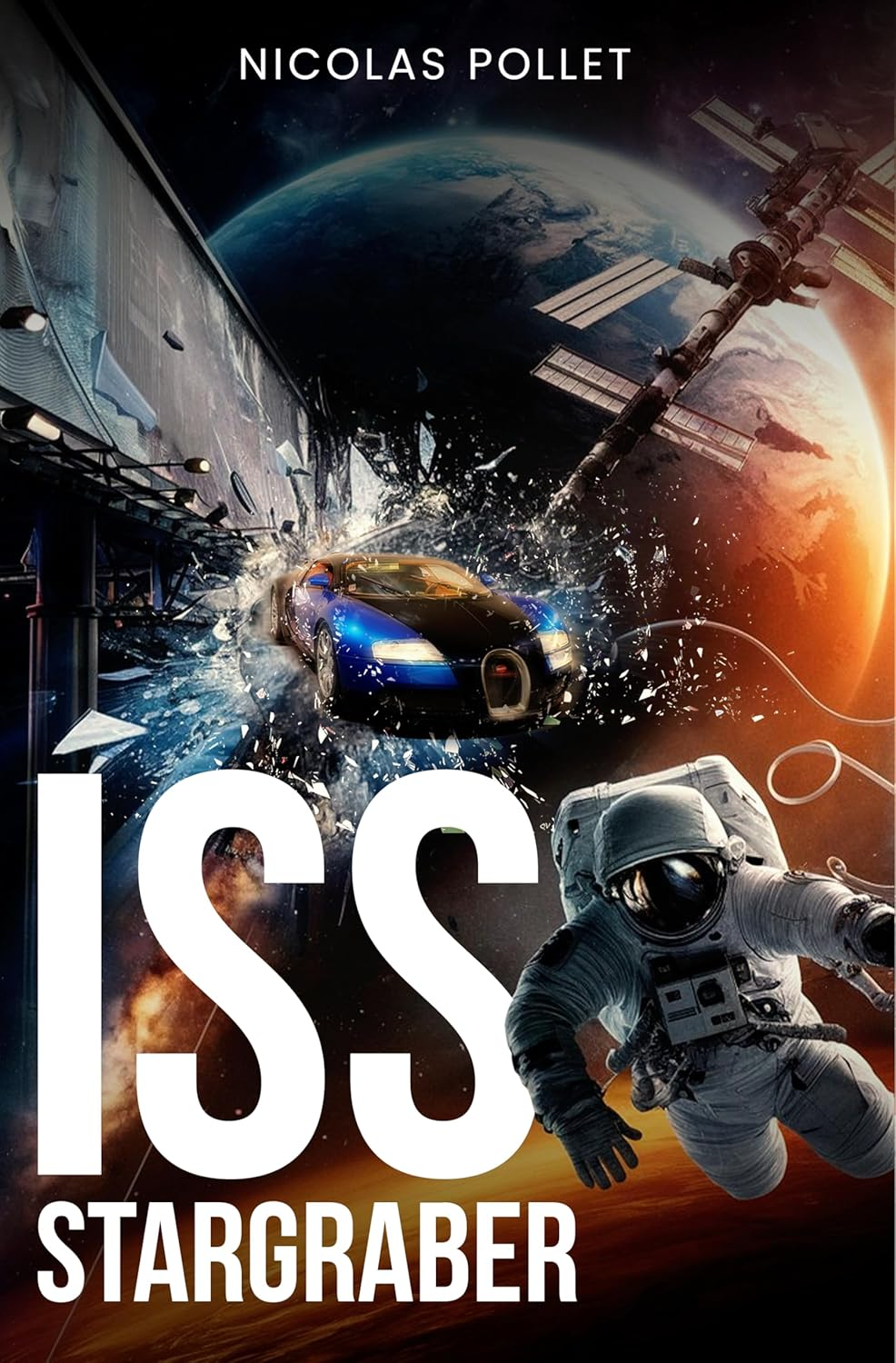
This is where the vision of a station like the one in ISS Stargraber becomes more than just a story. In the novel, the Stargraber is a vast, 25,000-mile-long orbital structure that provides energy to Earth. In a real-world crisis, such a structure could be adapted as a survival hub, using solar energy to keep life-support systems running. Its size could allow thousands to live there, at least temporarily, while the surface of Earth heals.
Of course, such a project would require cooperation on a scale humanity has rarely achieved. Funding, engineering, political agreements, and decades of commitment would be necessary. Yet, if the alternative is extinction, the cost might be worth it.
In the end, an asteroid strike is not the only threat humanity faces, but it is one of the most final. Preparing now means we are not left scrambling when it is already too late. Books like ISS Stargraber remind us that our greatest achievements in space could also become our greatest lifelines. The question is whether we will build them before disaster strikes or after.
Head to Amazon to fetch your copy: https://www.amazon.com/dp/B0F56P7XVR.