Science fiction has always been about more than gadgets, spaceships, or distant worlds. At its best, it is about people caught in extraordinary situations, forced to make choices that reveal what it means to be human. That is why high-stakes sci-fi adventures remain popular: They combine the thrill of spectacle with the depth of character. Nicolas Pollet’s ISS Stargrabber is a clear example of why this kind of storytelling continues to draw readers in.
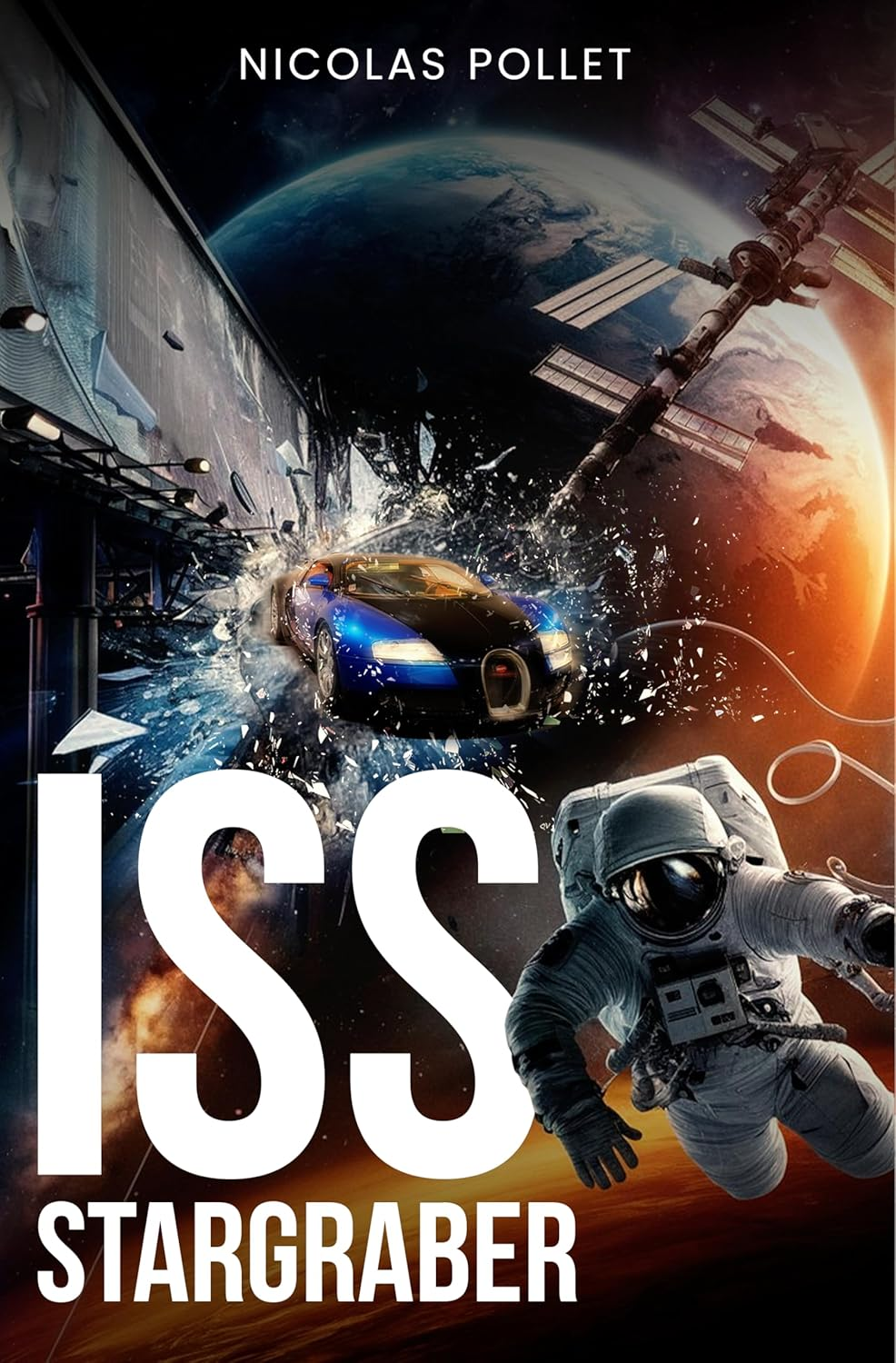
In a story like ISS Stargrabber, the stakes are not limited to one city or one nation. The survival of Earth itself hangs in the balance. The station that circles the planet is both a marvel of progress and a potential point of failure. Readers are drawn to the idea that humanity can build such wonders, but they are equally compelled by the dangers that come with them. These stories invite us to ask: What happens when technology meant to save us becomes the thing that threatens us?
Space settings capture the imagination, but they also draw on real scientific ideas. The space elevators in ISS Stargrabber are based on theories that engineers continue to explore. The solar power systems that fuel Earth from orbit mirror projects already being tested. By weaving real science into thrilling plots, books like this make readers feel like they are looking at a possible future, not just a distant dream.
High-stakes sci-fi works when the people at the center feel real, with flaws, doubts, and fears. John Desmond is not a superhero. He is a man broken by loss, who finds himself forced into action he never asked for. Victoria Palmers is not a chosen savior. She is a miner whose knowledge of geology and survival proves vital. These characters remind us that extraordinary circumstances often fall on ordinary people, and that is what makes the stories relatable.
The tension in stories like ISS Stargrabber also comes from the unknown. Who can be trusted? What is the true scope of the danger? What hidden motives drive those in power? Readers return to these books because they echo real feelings in the modern world. We live with uncertainty, with technology that both amazes and unsettles us, and with questions about the future we are building. High-stakes sci-fi offers a way to explore these anxieties in a dramatic but safe form.
A chase through orbit, a sabotage in a crowded module, a conspiracy that stretches from Earth to the stars—these moments light up the imagination and provide us with the reason to continue reading the book till the very end. They give us a sense of urgency, of racing alongside the characters toward an uncertain end. The best stories keep that momentum alive until the last page, and ISS Stargrabber does exactly that.
In short, high-stakes sci-fi adventures show us worlds we want to believe in, characters we can relate to, and dangers that feel close enough to be real. They remind us that the line between wonder and fear is thin and that humanity’s future may depend on how we walk it.
Pollet’s novel is another proof of this enduring appeal because it captures both the awe of living in space and the terror of what happens when everything begins to unravel. If you want to experience the story in full detail and know why readers love it so much, you can purchase the book from Amazon.
Here is a link to purchase: https://www.amazon.com/dp/B0F56P7XVR.