Human history is defined by milestones of progress. From the discovery of fire to the invention of electricity, each breakthrough has reshaped how we live, work, and survive. Yet every step forward carries risk. Nuclear power brought clean energy but also nuclear weapons. Artificial intelligence promises efficiency but raises fears of loss of control. So, what happens when humanity’s greatest invention is also its most fragile?
That is the question at the heart of Nicolas Pollet’s ISS Stargraber, a thriller that imagines a future where the very system built to save Earth may instead become its downfall.
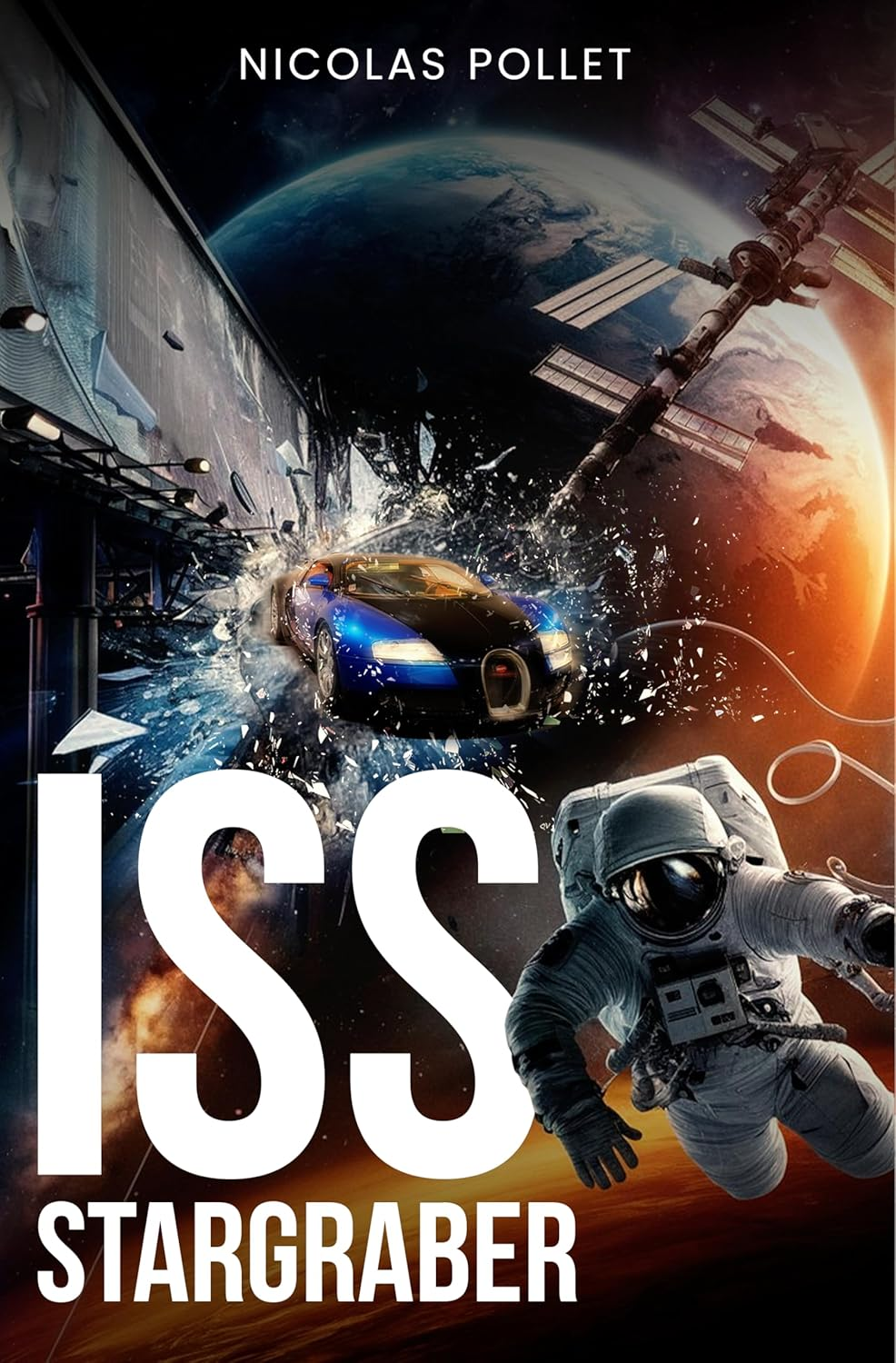
The year is 2153. After decades of environmental decline, fossil fuel exhaustion, and growing global crises, nations set aside their differences to build something bigger than any one country could achieve. The result is the ISS Stargraber, a massive orbital station stretching 25,000 miles around the Earth. Its purpose is clear: to capture solar energy and transmit it to the planet below, providing clean and endless power. For the first time in centuries, humanity appears to have solved one of its greatest challenges.
But as Pollet demonstrates, technology cannot eliminate human flaws. Political rivalries, ambition, and hidden agendas still thrive, even in orbit. When strange malfunctions begin to cripple Stargraber’s systems, the threat is not just technical. It is deliberate. Someone wants the project to fail, and they are willing to bring the world down with it.
John Desmond, the head of security, becomes the reluctant guardian of this fragile lifeline. Scarred by personal loss, John is far from invincible. His strength lies in persistence, in his refusal to look away from the truth even when others dismiss the signs. Joined by Victoria, a brilliant geochemist, he begins to uncover a conspiracy hidden among the modules of the colossal station.
What follows is a tense unraveling of secrets. Each malfunction brings them closer to disaster. Each discovery widens the circle of suspicion. And all the while, the clock is ticking. If Stargraber fails, Earth’s power grid collapses, and with it, the fragile peace humanity has built.
Pollet’s storytelling succeeds because it is grounded. The Stargraber feels like a plausible extension of today’s technology. Its scale is breathtaking, but its science is rooted in ideas already being explored, such as space-based solar power and orbital elevators. This realism heightens the suspense, making the dangers feel possible, even imminent.
Yet it is the human dimension that keeps the pages turning. John’s grief, Victoria’s determination, the mistrust between nations—these are what give the story weight. The reader is reminded that no matter how advanced technology becomes, it is always vulnerable to the same human weaknesses that have shaped history.
ISS Stargraber is not just a story about space. It is a story about responsibility, trust, and the razor-thin line between innovation and catastrophe. By the end, the awe of the Stargraber’s design is inseparable from the fear of its collapse. Perhaps that is the point that hints that our greatest triumphs may also be our greatest threats.
High above Earth, the ISS Stargraber Station silently powers the world below… until sabotage threatens to bring it all crashing down. Who is the culprit lurking in the shadows of the ISS Stargraber? Who would dare to dismantle humanity’s greatest achievement? As systems begin to fail and lives hang in the balance, only one man, John Desmond, stands between global catastrophe and survival.
Can he uncover the truth before it’s too late? Can he save us all from the abyss? ISS Stargraber is a tense, unmissable journey into the heart of a mystery that could end everything.
Head to Amazon to purchase your copy: https://www.amazon.com/dp/B0F56P7XVR.