Every great science fiction story begins with a single “what if.” What if humanity could build something so vast and powerful that it could change life on Earth forever? In Nicolas Pollet’s ISS Stargraber, that “what if” takes the shape of the Stargraber Geo Orbital Station, a colossal man-made ring encircling the planet, capable of transferring unlimited solar energy to Earth. It is both a symbol of human achievement and a cautionary reminder about the delicate balance between innovation and responsibility.
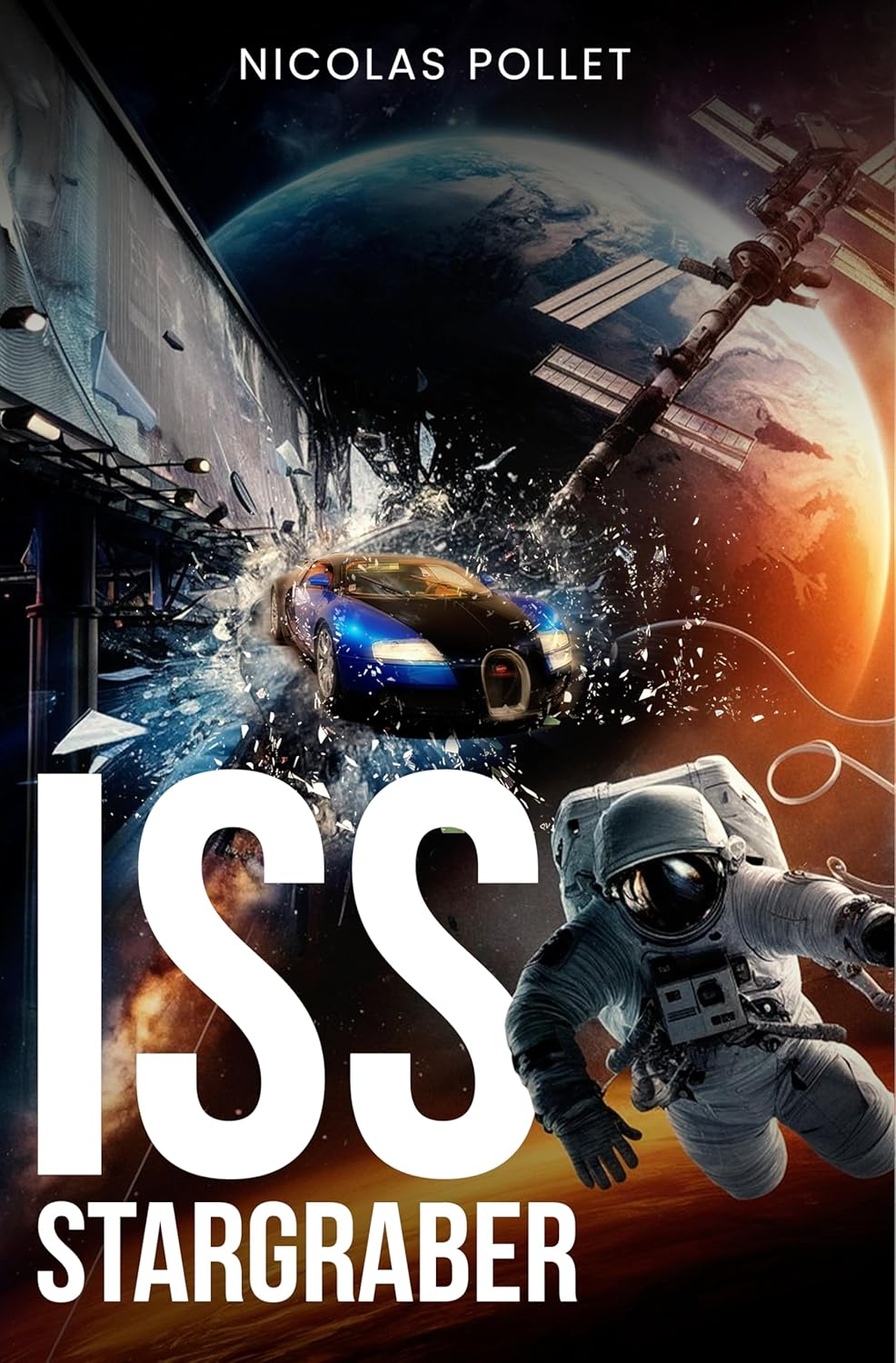
Building a believable world like Stargraber takes more than imagination. It requires grounding futuristic ideas in real science and human emotion. Pollet’s approach to creating this mega-station feels like a blend of an engineer’s precision and a storyteller’s vision. The station is not an abstract idea; it is described in practical, physical terms. It spans 25,000 miles, divided into modules that function like small cities, each with its own laboratories, housing, and transportation systems. Readers can picture the hum of machinery, the curve of its orbit, and the claustrophobic corridors where much of the story’s tension unfolds.
Part of what makes the Stargraber station so compelling is its plausibility. In recent years, scientists and space agencies have proposed concepts like orbital solar power satellites, structures that could collect energy from the sun and beam it to Earth. The book takes this real-world research and magnifies it, imagining a future where this technology is no longer experimental but essential. This fusion of fact and fiction allows readers to engage with the story not as pure fantasy, but as a potential future shaped by today’s scientific ambitions.
The construction of Stargraber also mirrors humanity’s nature, our drive to build bigger, faster, and smarter, even when we do not fully understand the consequences. The novel’s attention to engineering detail serves a larger purpose: to highlight the ethical and emotional costs of progress. Within the walls of the station, politics, corporate control, and scientific rivalry intertwine. It becomes clear that the most challenging part of building something so immense is not the machinery, but the morality. Who owns the energy that powers Earth? Who decides how it is used? These are the same questions we face today as nations and corporations race to control renewable energy technologies.
Pollet’s world-building also extends beyond the steel and solar panels. The station is a stage where human stories unfold, stories of ambition, guilt, love, and betrayal. The precision of its design is matched by the complexity of the people who inhabit it. Every innovation has a heartbeat behind it, reminding readers that technology alone does not define the future; people do.
In ISS Stargraber, Nicolas Pollet captures both the wonder and the weight of creation. The Stargraber station is a triumph of imagination built on the foundation of real science and human fallibility.
For readers who love stories that blend believable technology with emotional depth, ISS Stargraber by Nicolas Pollet offers not just an escape into space but a thoughtful look at the cost of reaching for the stars.
Get your copies from Amazon: https://www.amazon.com/dp/1967963231.