When people think of science fiction, they often envision alien invasions, distant planets, or interstellar battles. But what if the greatest mystery waiting in the future isn’t out there at all? What if the real story of tomorrow is about us, about what happens when humanity becomes both its own creator and its own threat? Nicolas Pollet’s ISS Stargraber invites readers to ask that very question.
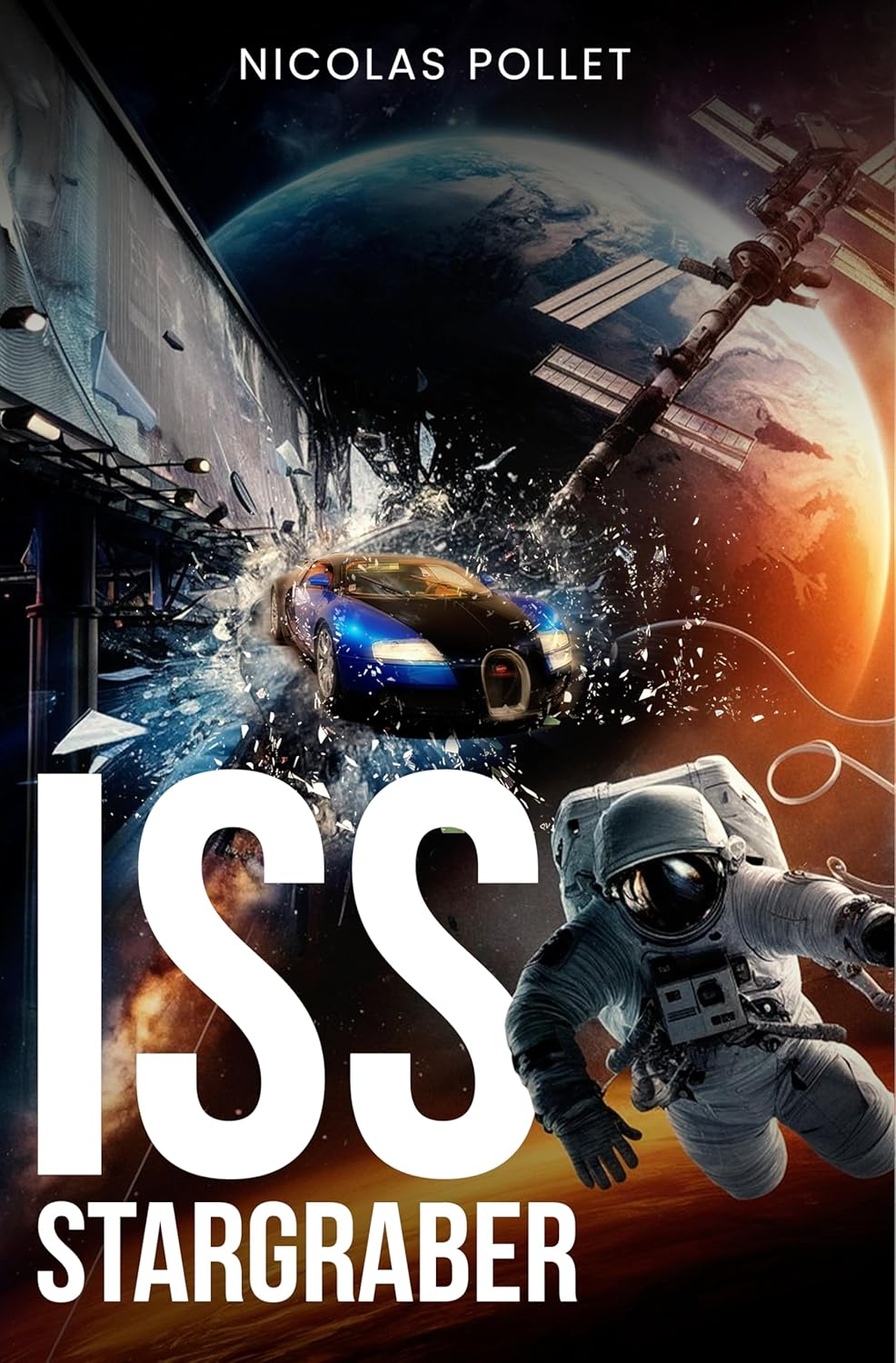
Set aboard a massive orbital station encircling Earth, ISS Stargraber imagines a future where humanity has built a technological marvel capable of transferring unlimited solar energy to the planet below. On the surface, it is a dream of progress, clean energy, endless power, and the promise of prosperity for all. But as the story unfolds, this dream begins to reveal cracks. The very technology designed to save the world becomes the instrument that could destroy it. The real danger does not come from an alien race or an external force. It comes from human ambition, fear, and greed.
Science fiction often reflects the time it is written in, and ISS Stargraber feels strikingly relevant to ours. We live in an era defined by innovation and technological dependence. Artificial intelligence can write, diagnose, and even make decisions once left to people. Governments and corporations manage vast systems of energy, data, and control. These advances promise convenience and progress, but they also bring moral and emotional consequences. When technology begins to shape our choices, we must ask, are we still in control, or have we become the subjects of our own creations?
The book’s antagonist, Mathias Bronski, embodies this question. He believes humanity has grown too dependent, too complacent. His radical plan to save civilization by destroying part of it reveals how quickly good intentions can twist into something monstrous. His actions are not driven by alien logic, but by human conviction. He is a reminder that the line between savior and destroyer often exists within the same person.
In contrast, John Desmond, the story’s reluctant hero, shows another side of humanity, the capacity for courage, empathy, and moral clarity. Through his journey, ISS Stargraber doesn’t point to the stars for answers; it looks inward. It asks whether humanity’s evolution will be defined by compassion and balance, or by arrogance and control.
What makes this story powerful is its honesty. It doesn’t rely on creatures from another world to create tension. Instead, it confronts the fact that the most unpredictable and dangerous force in the universe might be human nature itself. The book turns the familiar sci-fi question, “Are we alone?” into a deeper one: “Are we ready to face ourselves?”
In this novel, the enemy is not an alien army, but the reflection of our own ambition. It is a reminder that before we conquer the stars, we must first understand what it means to be human.
For readers who enjoy thought-provoking, realistic science fiction, ISS Stargraber by Nicolas Pollet offers a thrilling and sobering vision of the future, one where the fight for survival begins within.
Get your copies from Amazon: https://www.amazon.com/dp/1967963231.