The idea of living on another planet feels like the ultimate adventure. Scientists, dreamers, and billionaires are all imagining a future where humanity expands beyond Earth, building colonies on Mars or space stations orbiting the stars. But before we rush toward the next frontier, it’s worth asking a deeper question: are we actually ready, not just technologically, but psychologically and ethically, to become a multi-planet species? Nicolas Pollet’s ISS Stargraber offers a striking look at what that future might really demand of us.
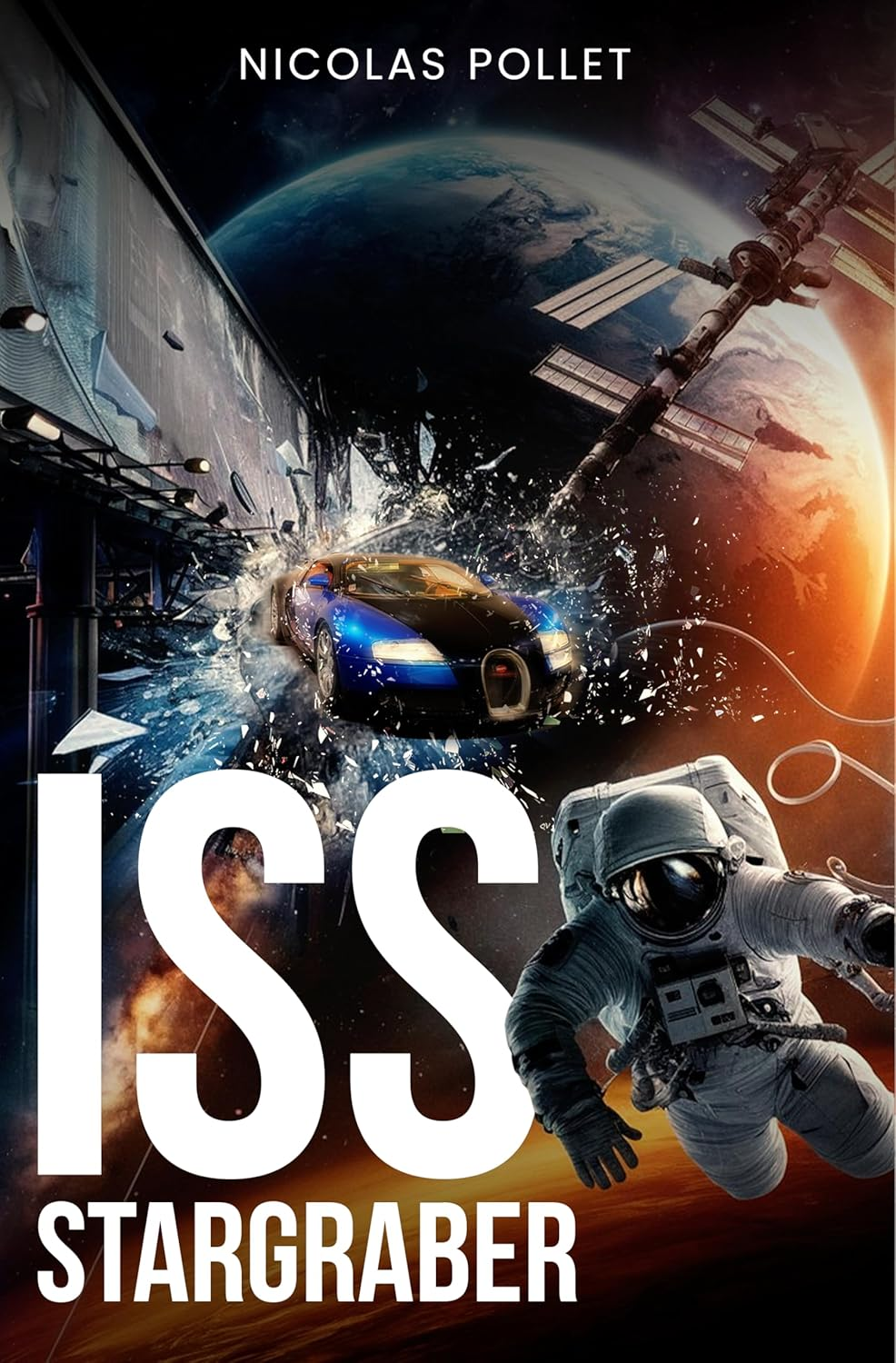
In ISS Stargraber, humanity has already leaped. The Stargraber Geo Orbital Station, an immense ring encircling Earth, stands as a symbol of progress and ambition. It provides unlimited solar energy to the planet, solving the crisis of fossil fuel dependence. But life aboard the station is far from perfect. Behind the sleek technology and shimmering solar panels lies tension, isolation, and moral uncertainty. People struggle not only with survival in space but also with the same human weaknesses, greed, corruption, and control that have always followed us. The book raises a haunting question: if we cannot manage harmony on one planet, what makes us think we can do better on another?
The psychological challenge of space colonization is often overlooked. On Earth, we usually take for granted the open sky, the sensation of gravity, and the presence of nature. In another world, these comforts vanish. Even the slightest mistake can have deadly consequences. Real-life experiments, where volunteers live in sealed habitats for months, such as NASA’s Mars simulation programs, reveal the impact of isolation on the mind. People face stress, fatigue, and emotional strain. In ISS Stargraber, this same claustrophobic reality is vividly portrayed. Characters live in confined spaces, surrounded by machinery, far from the world they once knew. Their struggles show that the biggest challenge in space may not be technical. It may be staying human.
Ethically, too, the idea of becoming a multi-planet species raises difficult questions. Should we focus on fixing Earth before we try to colonize another planet? What rights would settlers have on Mars or in orbit? Who would control the resources, the technology, and the decisions that affect millions of lives? In Pollet’s novel, the Stargraber station becomes a microcosm of these conflicts. What began as a project for the common good slowly turns into a symbol of power. Governments and corporations use energy as a form of leverage, and scientific progress becomes tied to political control. The story reminds us that without accountability and compassion, even the noblest innovations can be corrupted.
The dream of spreading beyond Earth is exciting, but it must be grounded in self-awareness and responsibility. Becoming a multi-planet species will not simply require rockets and technology; it will need a shift in mindset. It will also require maturity. We must learn cooperation, empathy, and balance before we carry our civilization into space. Otherwise, we risk repeating the same mistakes on a grander scale.
ISS Stargraber is more than a story about space. It is a reflection of who we are and what we might become. For anyone fascinated by the future of humanity, this book offers a realistic and thought-provoking look at our readiness to take that next step. It reminds us that the journey to the stars begins, above all, within ourselves.
Get your copies from Amazon: https://www.amazon.com/dp/1967963231.