Humanity has always looked to the stars with a mix of curiosity and ambition. Every great leap, from flight to space travel, began as an idea that seemed impossible. In Nicolas Pollet’s ISS Stargraber, that idea becomes extraordinary: a 25,000-mile orbital station encircling Earth, capable of capturing limitless solar energy and transmitting it back to the planet. It is a breathtaking vision of what human ingenuity might achieve, but is it something we could ever build in reality?
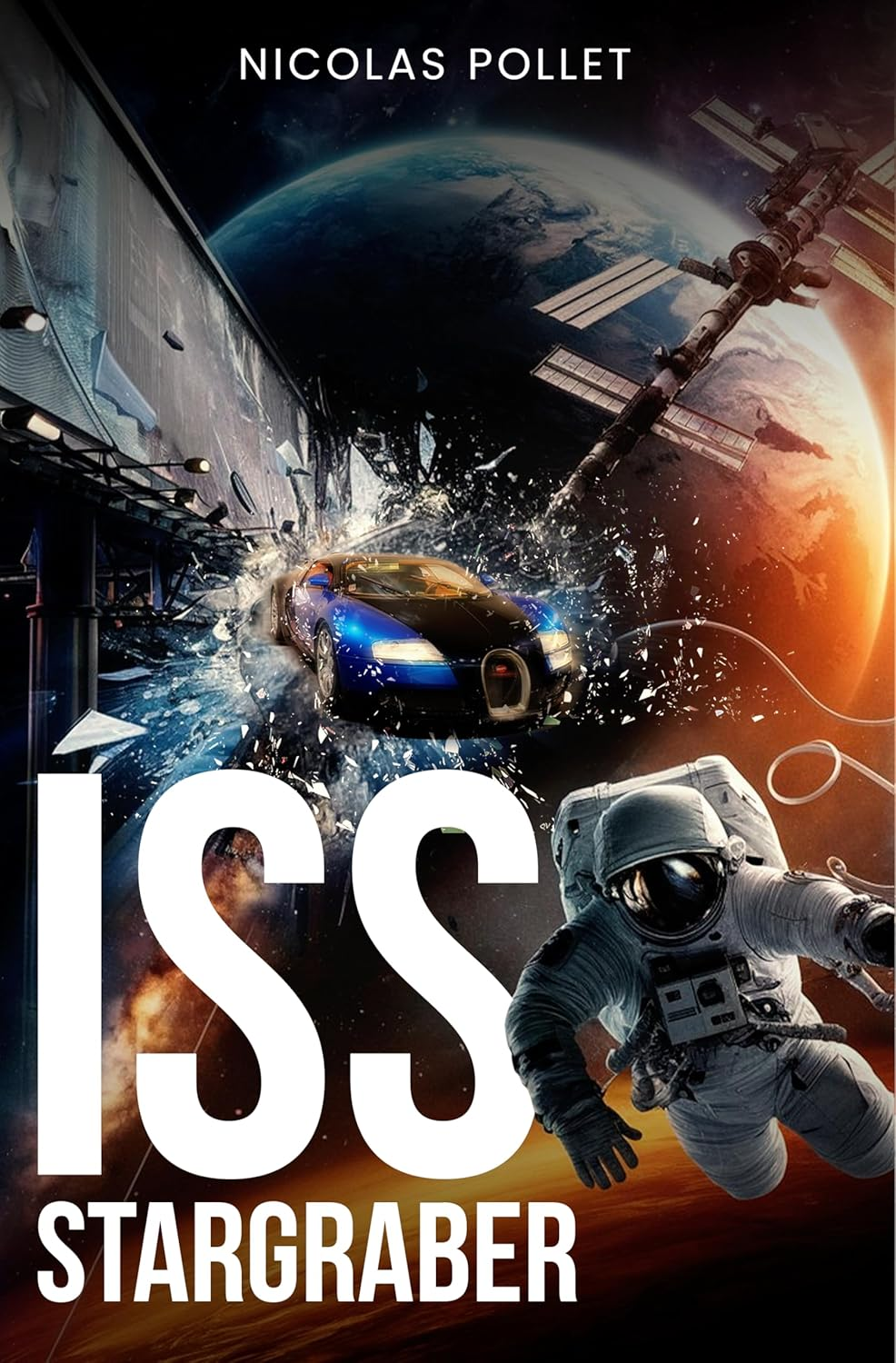
In Pollet’s novel, the Stargraber Geo Orbital Station represents the pinnacle of human progress. Composed of thousands of interconnected modules, it harnesses sunlight continuously, beaming clean, sustainable energy to Earth. It is a symbol of hope and innovation, a technological miracle that unites nations under a shared goal. However, as the story unfolds, the station also becomes a stage for greed, secrecy, and conflict, showing how human ambition can be both inspiring and dangerous.
Beyond the drama, though, ISS Stargraber raises a fascinating real-world question about feasibility. Could such a colossal structure truly exist? Surprisingly, some of the science behind it is not as far-fetched as it sounds.
Scientists and engineers are already studying the concept of gathering solar energy from space. Space-based solar power (SBSP) operates on a straightforward concept: sunlight collected in orbit can be converted into energy and transmitted wirelessly, typically via microwaves or lasers, to receiving stations on Earth. Because there are no clouds or nighttime interruptions in space, the system could, in theory, provide continuous power. Japan’s space agency, JAXA, and NASA have already conducted small-scale tests of wireless power transmission, demonstrating that the principle is viable.
What remains a challenge is scale. Building something as massive as the Stargraber Station, stretching 25,000 miles, would require breakthroughs in materials science, robotics, and orbital construction. The structure described in the book would need to withstand radiation, micro-meteorite impacts, and the immense stresses of orbit. Engineers today are exploring similar problems through projects like the International Space Station (ISS), which, though far smaller, taught us how to assemble and maintain modular structures in space. The ISS, for example, measures just over 350 feet in length and took more than a decade to complete through international cooperation. By comparison, the Stargraber would be nearly 70,000 times larger.
One potential step toward such an achievement could be the concept of a space elevator, a theoretical cable that stretches from Earth’s surface into orbit. If made from materials as strong and lightweight as carbon nanotubes or graphene, it could dramatically reduce the cost and difficulty of transporting materials into space. Combined with advanced autonomous construction systems and sustainable propulsion technologies, these developments might one day make projects like the Stargraber possible.
Of course, even if humanity could build such a station, the ethical and political questions would be as complex as the engineering. Who would control it? Who would benefit from the energy it provides? And how would we prevent it from becoming a weapon or a monopoly? These same moral challenges drive the conflict in ISS Stargraber, grounding its futuristic vision in the realities of human behavior.
So, could we really build the Stargraber Station? Technologically, one day perhaps. Spiritually and politically, we may still have some distance to travel. For readers who love stories where science meets moral choice, Nicolas Pollet’s ISS Stargraber offers both a thrilling adventure and a thought-provoking glimpse into what humanity’s next great leap might cost.
Get your copies now! Available on Amazon: https://www.amazon.com/dp/1967963231.