Every great discovery begins with a question. But what happens when asking that question leads you into danger? When knowledge becomes not just power, but a risk? In Nicolas Pollet’s ISS Stargraber, the story of Victoria Palmers explores exactly that, the courage it takes to search for truth and the heavy price that sometimes follows.
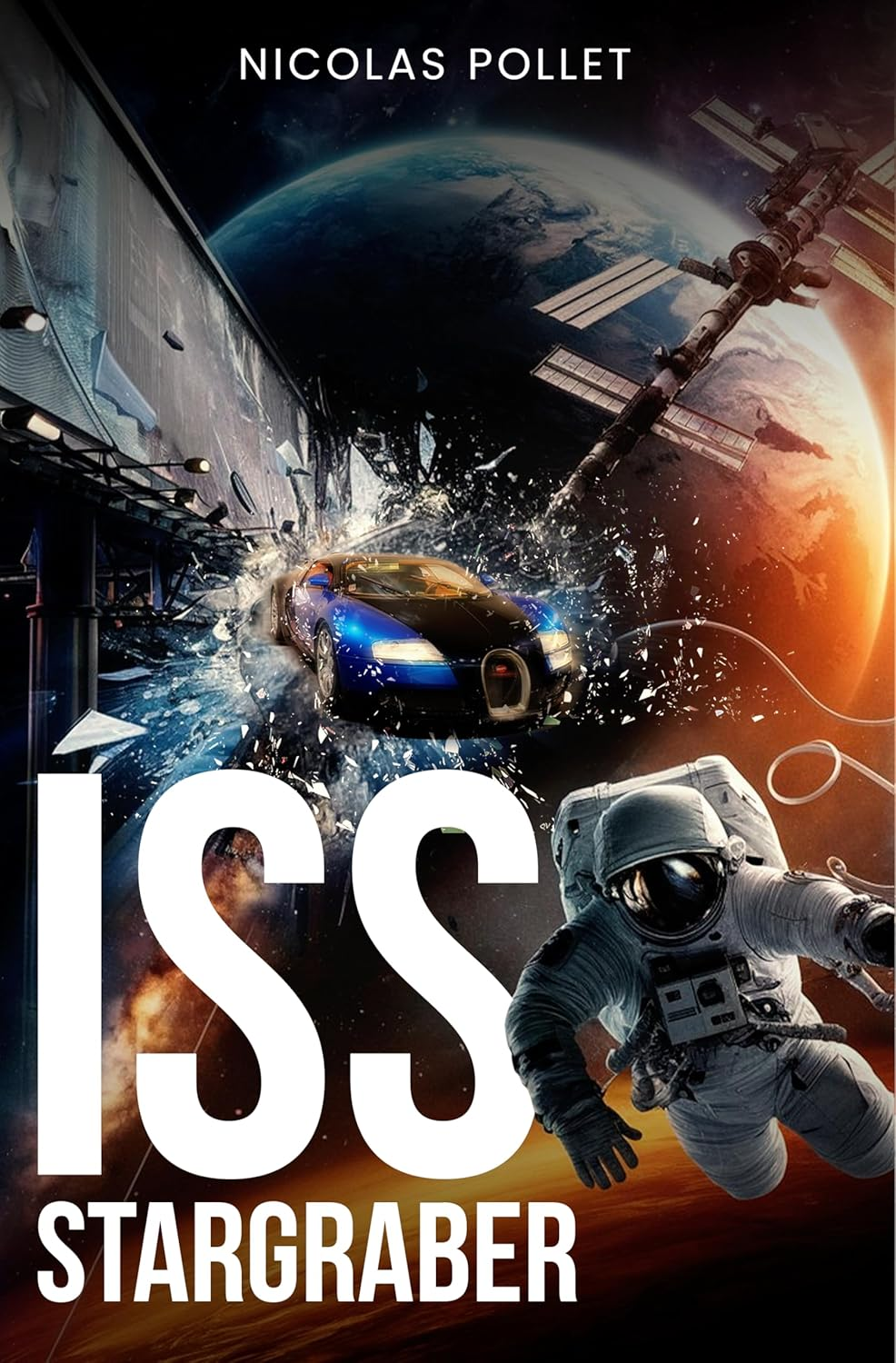
Victoria Palmers is not a superhero or a distant futuristic archetype. She is a scientist, an engineer, and above all, a deeply human character, driven by curiosity and a need to understand the world around her. Her journey begins on Earth, in a near-future society that relies on a massive orbital station, the Stargraber, to collect and transfer limitless solar energy back to the planet. But when she uncovers signs of sabotage and political deceit, her pursuit of answers forces her to confront the darker side of progress.
Victoria’s story represents the moral heart of ISS Stargraber. She is a woman of logic and determination who finds herself caught between corporate greed, government secrecy, and her own ethical limits. Her courage doesn’t come from strength of arms or heroic speeches. It comes from her willingness to question what others accept, even when it puts her at risk. In a world where technological progress has often overshadowed moral progress, her character reminds us that knowledge without empathy is a powerful yet dangerous force.
Her determination echoes the real-world challenges faced by whistleblowers, scientists, and truth-seekers who confront robust systems. From data analysts exposing manipulation in tech industries to researchers warning of environmental collapse, courage often begins with asking the right questions. Like Victoria, they face isolation, disbelief, and the personal cost of standing up to systems that value results over responsibility.
Yet Pollet’s writing avoids making her a symbol of perfection. Victoria’s curiosity is both her gift and her downfall. The more she learns about the secrets behind the Stargraber Station, the more she realizes that truth can be destructive. Her discoveries come at a cost, not only to her safety but to her sense of trust in the institutions and people she once admired. In that way, ISS Stargraber doesn’t just explore science fiction; it explores human psychology. It asks how much we can bear to know and whether the search for truth is worth the pain it can cause.
Through Victoria’s story, Pollet highlights the timeless struggle between knowledge and control, conscience and ambition. Her courage lies not in escaping danger, but in facing the moral consequences of discovery. She stands as one of science fiction’s most grounded heroines, flawed, intelligent, and deeply real.
ISS Stargraber is more than a space thriller; it is a study of human resilience in the face of overwhelming power. Victoria Palmer’s journey reminds us that the future will not just belong to those who invent it, but to those who dare to question it. For readers who admire stories of intellect, integrity, and the emotional weight of discovery, Nicolas Pollet’s ISS Stargraber is a compelling and unforgettable read.
Get your copies from Amazon: https://www.amazon.com/dp/1967963231.