For decades, science fiction has offered a vision of the future that feels both thrilling and distant. From towering space stations to artificial intelligence and renewable energy systems, these imagined worlds inspire scientists and engineers to bring fiction to life. Nicolas Pollet’s ISS Stargraber presents one such vision: a massive orbital station encircling Earth, supplying unlimited solar energy while hosting advanced AI systems and human life in space. But how far are we from achieving the technologies and possibilities depicted in this gripping novel?
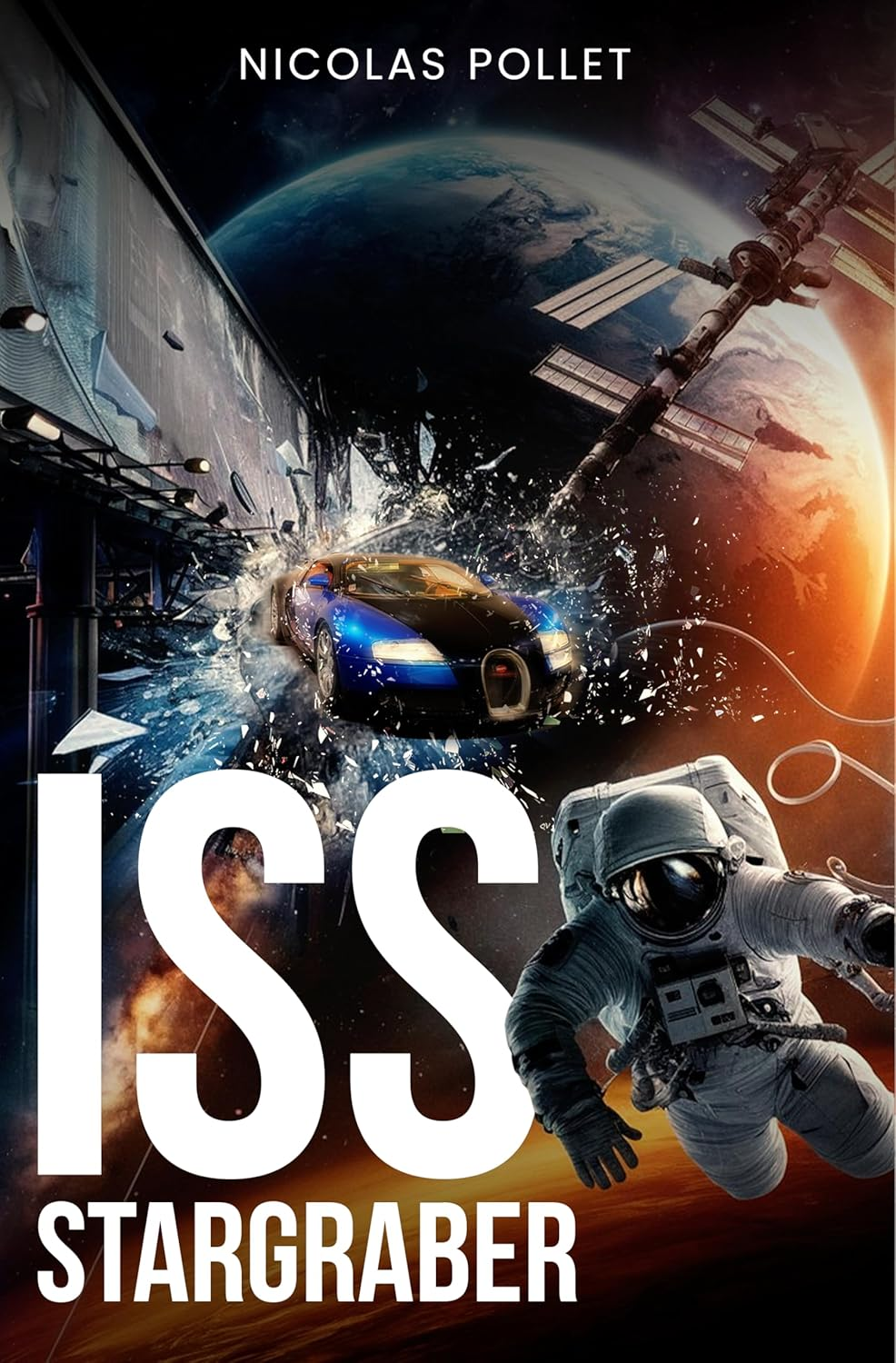
The Stargraber station in Pollet’s story is enormous, stretching 25,000 miles in orbit, and it represents a pinnacle of human engineering. Its primary function is to collect and transmit solar energy to Earth, providing a clean and virtually limitless source of power. While this may seem far-fetched, scientists are already exploring orbital solar power systems. Experiments in wireless energy transmission and high-efficiency solar arrays suggest that capturing sunlight in space and sending it to Earth could become feasible within the next few decades. If successful, such technology could transform our understanding of global energy supply, much like it does in ISS Stargraber.
Artificial intelligence is another area where fiction is catching up with reality. In the novel, AI systems assist with security, operations, and personal management aboard the station. Today, AI is rapidly advancing in fields such as cybersecurity, autonomous systems, and robotics. AI algorithms monitor critical infrastructure, detect anomalies, and support real-time decision-making processes. While we do not yet have fully autonomous AI managing a space station, these developments show that the core ideas imagined in the book are not purely speculative. They are extensions of current scientific trends.
Other futuristic concepts in ISS Stargraber also have real-world parallels. Space elevators, for example, have long been considered science fiction; yet, engineers and materials scientists are investigating ultra-strong materials, such as carbon nanotubes and graphene, that could make them possible. The idea of a human habitat in orbit is no longer purely fictional, either, with space stations like the International Space Station demonstrating long-term life support, and companies planning commercial orbital habitats. These initiatives highlight how humanity is steadily moving closer to the kind of orbital civilization imagined in Pollet’s novel.
What makes ISS Stargraber compelling is not just the technology, but the way it explores human experience within that environment. High-stakes ethical dilemmas and the need for resilience and collaboration are central to the story. As we develop advanced technologies, we must remember that progress is only meaningful if it serves people safely and responsibly. Science fiction like this reminds us to strike a balance between innovation and foresight, a lesson that is increasingly relevant as AI, renewable energy, and space exploration advance rapidly.
For readers fascinated by a near-future world where technology and human ambition converge in orbit, ISS Stargraber offers a thrilling and thoughtful experience. It not only entertains with suspense and adventure but also encourages reflection on the technologies that are beginning to shape our real-world future.
For anyone curious about how close humanity is to reaching the stars, ISS Stargraber by Nicolas Pollet is a must-read. Available on Amazon: https://www.amazon.com/dp/1967963231