For centuries, humanity has gazed up at the sky with wonder and curiosity. From the first telescopes to modern space probes, the question remains the same: what lies beyond Earth’s edge? The boundary of our planet is not a solid wall but a gradual transition where the atmosphere thins and the vacuum of space begins. Beyond this point, Earth gives way to the vast expanse of stars, planets, and galaxies, a frontier that challenges our understanding and inspires our imagination.
Exploration beyond Earth has always been more than a scientific pursuit. It reflects human ambition, curiosity, and the survival instinct. Today, as private companies, governments, and international collaborations invest in space travel, the vision of living and working in orbit is closer than ever. Orbital stations, lunar bases, and even plans for Mars settlements hint at a future where humanity does not simply observe space but actively inhabits it.
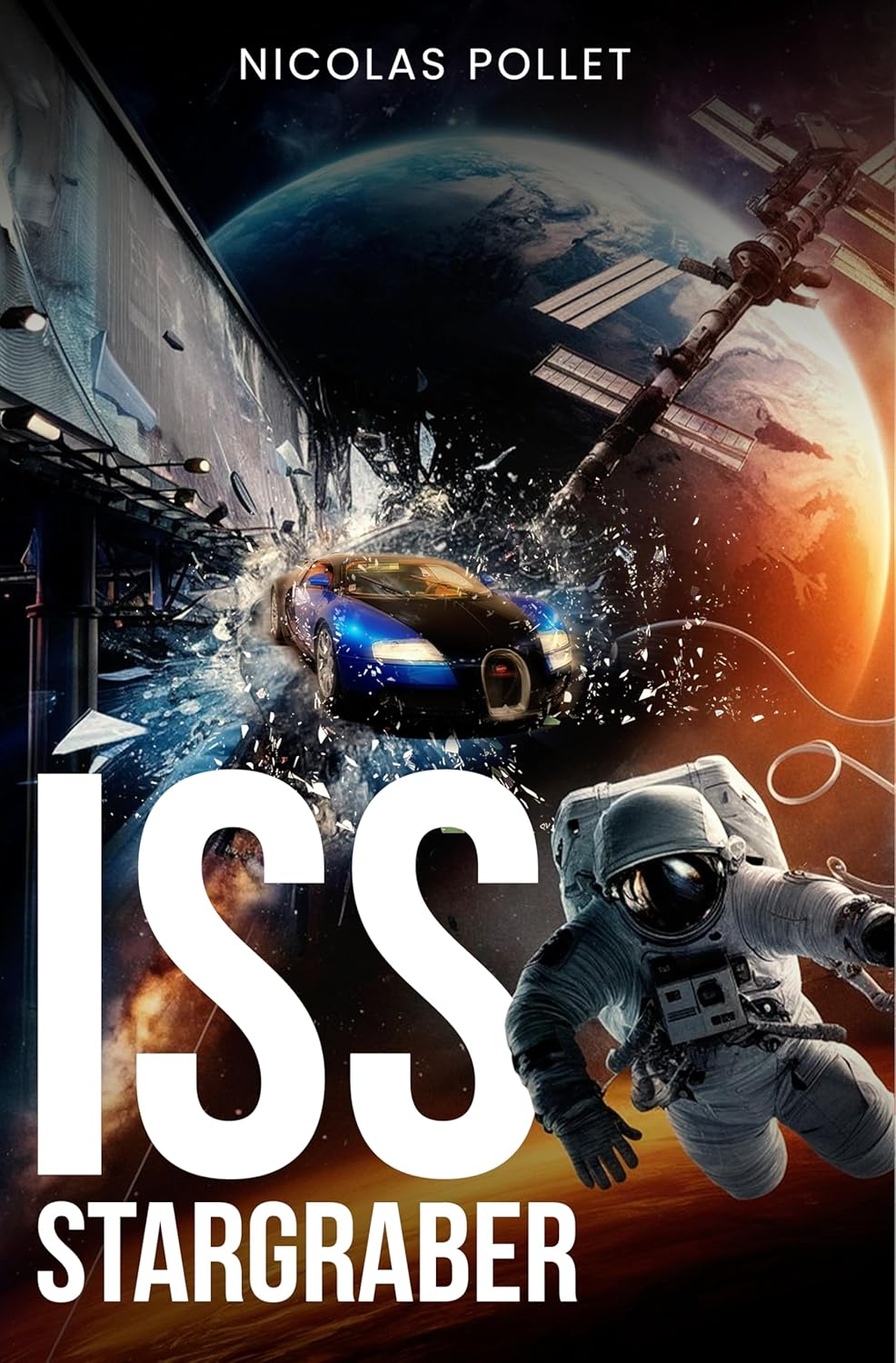
This desire to expand, control, and survive in space is vividly imagined in Nicolas Pollet’s ISS Stargraber. The novel follows John Desmond, a former Navy pilot turned security officer, as he navigates life aboard the colossal Stargraber orbital station, which supplies Earth with an unlimited source of solar energy. The story combines thrilling action with a vision of humanity reaching beyond its home planet while facing the same struggles of loyalty, resilience, and ethical choice that define life on Earth.
Space is a realm of extremes and possibilities. Beyond the protective layers of our atmosphere lies a place where gravity, radiation, and vacuum make life impossible without technology. However, it is also a realm that contains countless opportunities for discovery. Exoplanets orbiting distant stars, unexplored asteroids, and the potential for new forms of life challenge our imagination and our scientific capabilities. In this context, science fiction often serves as both a reflection and a prediction of our ambitions. Books like The Expanse or The Martian explore realistic human experiences in space. At the same time, ISS Stargraber adds another layer by examining how humanity’s political, corporate, and ethical struggles might follow us even into orbit.
The edge of Earth is not just a physical frontier but a symbol of transition. It is the point where human ingenuity meets the unknown. The Stargraber station in Pollet’s novel represents this perfectly. It also represents both a technological marvel and a human microcosm, where ambition and personal struggles collide. The story mirrors our current space race, where nations and companies compete to harness new technologies and establish footholds beyond our planet. It also raises increasingly relevant questions: how do we manage power in space? What responsibilities come with controlling resources in orbit or on other planets? And how do we preserve the human spirit while pushing the boundaries of science?
Ultimately, looking beyond Earth’s edge is an exercise in imagination, courage, and reflection. Science fiction, such as ISS Stargraber, allows readers to explore these frontiers safely while considering the real-world implications of our expansion into space. It reminds us that the journey is not just about reaching new places but about navigating the challenges and choices that come with them.
For anyone fascinated by the possibilities of life beyond Earth and the human stories that might unfold there, ISS Stargraber is a thrilling and thought-provoking read.
Get your copies from Amazon: https://www.amazon.com/dp/1967963231.