Every structure has a lifespan. The same is also true for the International Space Station. Being in outer space for over 25 years (since November 2000) and orbiting Earth every 90 minutes, it is one of the greatest scientific achievements of modern times and will eventually come to an end. For over two decades, the ISS has been a symbol of international cooperation and scientific research. It has hosted astronauts from around the world and supported experiments that improved medicine, technology, and our understanding of space. But plans to retire the ISS raise an important question. What comes next?
The end of the ISS is not a sign of failure. It is a natural step in the evolution of human space exploration. Structures in orbit face constant pressure. They are exposed to radiation, debris, and temperature extremes. Their components degrade over time. When maintenance becomes too costly, new solutions must be considered.
Several ideas are now being discussed. One possibility is a new generation of commercial space stations. Private companies are working on small modular stations that can be assembled and expanded over time. These stations could support tourism, research, and manufacturing in orbit. They would also reduce dependence on government-funded programs.
Another possibility is a larger international station that builds upon lessons learned from the ISS. This new station could be designed with better materials, more efficient systems, and safer shielding. It could support longer missions and serve as a gateway for travel deeper into space. Countries and companies could work together to share costs and knowledge.
There is also growing interest in stations that serve specific purposes. Some could act as fuel depots for spacecraft headed to the Moon or Mars. Others could serve as climate monitoring hubs with advanced sensors. Some might be dedicated to energy collection using large solar arrays. Each type of station would focus on a different need.
The end of the ISS also opens conversations about safety and responsibility. Future stations must be protected against natural hazards and human threats. Their systems must be reliable. Policies must be designed to prevent conflict and ensure shared access. Humanity must build these stations with long-term stability in mind.
Science fiction often explores what might happen after the retirement of the ISS. These stories show the potential for larger and more complex stations. They also reveal the risks that come with relying too heavily on systems in orbit.
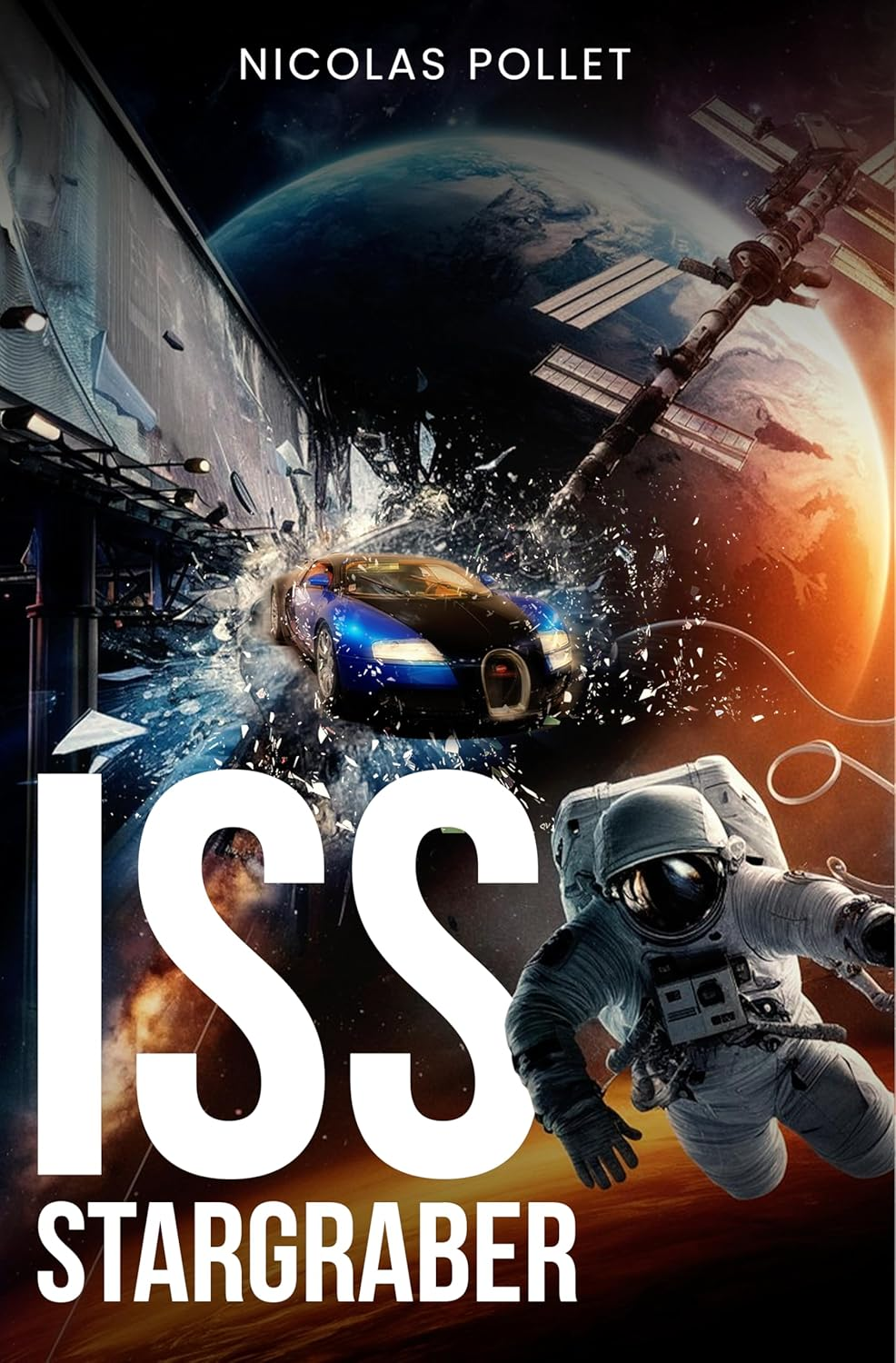
The book ISS Stargraber envisions one potential future. It displays an enormous 25,000-mile orbital station intended to supply electricity to Earth. It also demonstrates how easily political unrest and sabotage can jeopardize such a system. This book is an interesting and thought-provoking read if you want to investigate concepts regarding the future of orbital structures and what might take the place of the International Space Station.
ISS Stargraber challenges readers to imagine what comes next. If humanity can create machines that think, or stations that power entire planets, can it also learn to think beyond profit and pride? Can we match our technical genius with the same depth of ethical understanding?
Pollet’s story suggests that the answer depends on us. The tools we build are neither good nor evil. It is how we use them that defines our legacy. ISS Stargraber is not just a thrilling space story; it is a call to reflection. For anyone fascinated by the crossroads of science, morality, and human ambition, this book is a timely and essential read. It asks the question we can no longer afford to ignore: are we ready to control the power we’ve created, or will it end up controlling us?
Get your copies from Amazon: https://www.amazon.com/dp/1967963231.