There may come a day when looking up at the sky feels different, when it will not be perceived as a symbol of exploration but as a possible destination for survival. As environmental strain and seismic instability challenge life on Earth, the idea of living beyond the surface no longer feels entirely fictional. We know that space has long captured human imagination. It represents curiosity and expansion. But what if it becomes something more urgent? What if space shifts from ambition to necessity?
When Earth Feels Unstable
Extreme weather events, rising sea levels, and the threat of large-scale earthquakes remind us that Earth is dynamic. The planet has always changed. What feels different now is the scale of the human population and infrastructure at risk.
A severe global disaster, such as a massive earthquake affecting multiple regions, could disrupt energy systems, supply chains, and communications. Recovery would demand coordination on a scale never seen before. In such a scenario, alternative infrastructure beyond Earth’s surface might offer stability.
Colonizing the upper atmosphere or maintaining orbital habitats could provide redundancy. Critical systems such as energy generation, communications, and research could continue even if the surface experiences disruption.
Sanctuary or Escape
The idea of moving into space raises complex questions. Is it responsible to invest in orbital habitats while Earth struggles? Or is it wise to build backup systems in case the ground becomes unreliable?
Living above Earth would not be simple. Radiation exposure, limited resources, and psychological strain would challenge even the most prepared crews. Building and maintaining large-scale orbital stations would require global cooperation and sustained commitment.
Space is not a paradise. It is harsh and unforgiving. Yet it also offers perspective. From orbit, borders disappear. Humanity appears unified. That shift in viewpoint can reshape how we think about responsibility and survival.
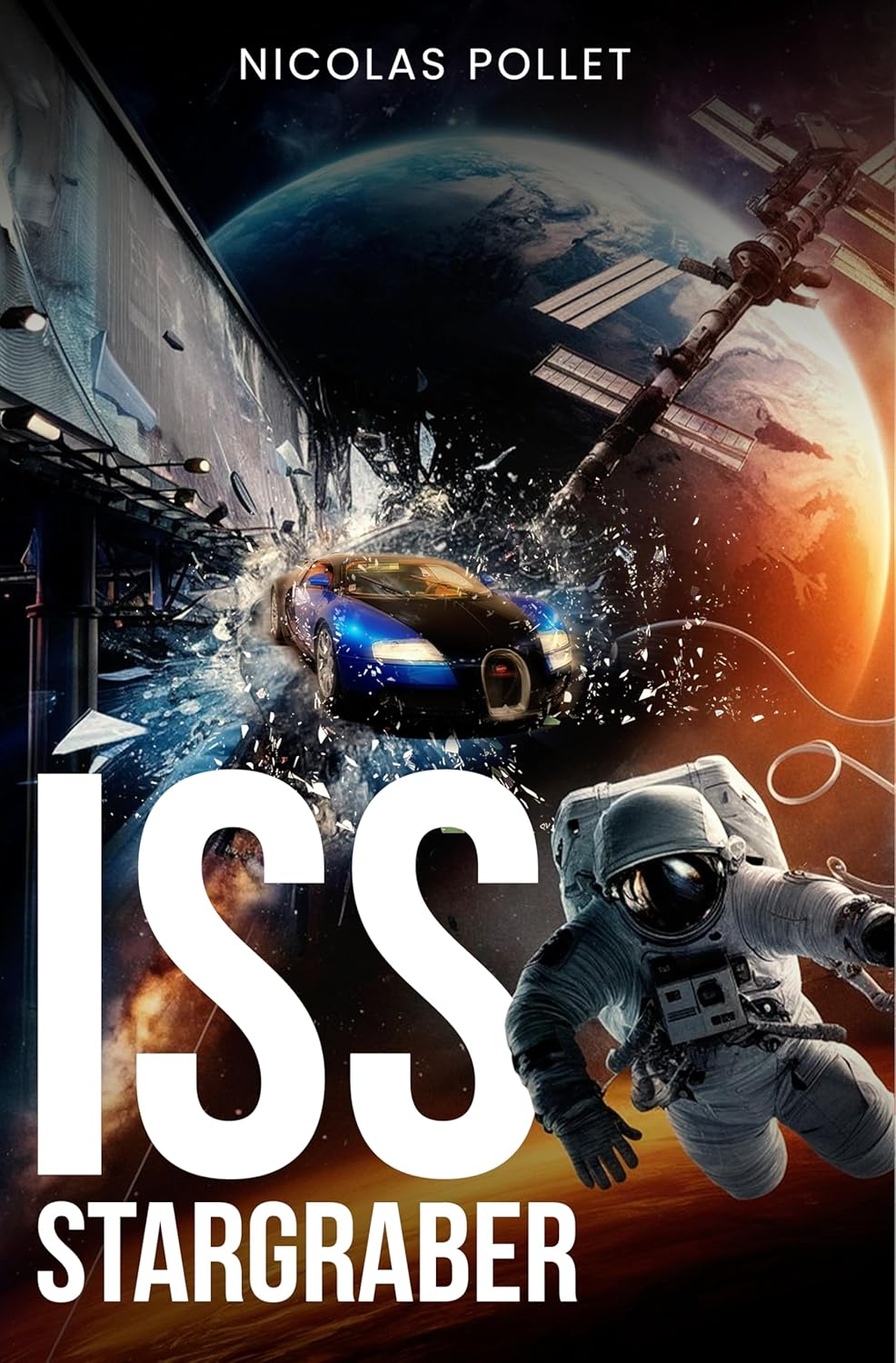
In ISS Stargraber, humanity constructs a massive orbital station after devastating earthquakes make Earth’s stability uncertain. The station becomes both a sanctuary and a pressure point. It holds the promise of survival but also the risk of centralized failure. The novel explores how even advanced infrastructure cannot escape human conflict and ambition.
No matter where humanity resides, human nature follows. Trust, leadership, fear, and ambition do not vanish in orbit. Any future home in space would still depend on cooperation and ethical decision-making. Space may provide a new setting, but survival will still depend on choices. Technology can support life, but it cannot replace responsibility.
The question is not only whether space could become our new home. It is whether we are prepared to carry our best values with us if it does.
If you are curious about how humanity might respond to Earth’s instability and what life above the planet could look like, ISS Stargraber offers a gripping exploration of that possibility. It invites readers to consider whether space is an escape or an extension of who we are. If you’re ready to orbit the edge of catastrophe and question everything we trust to keep us alive, then ISS Stargraber is your next must-read.
Availability:
The book is available on Amazon for purchase: https://www.amazon.com/dp/B0F56P7XVR.