We like to think Earth will always be here for us, that it will always be the same: habitable for eternity. But, like every other thing in the universe, Earth has a deadline, too. Our planet is fragile, and with every single day, it is coming closer to its final breath.
Over the past century, Earth’s climate has transformed rapidly. For example, ice caps have melted. Oceans have risen. Weather systems have grown violent. They have become unpredictable and dangerous. But while humanity has made strides in adapting to climate change, there’s another threat, deep beneath our feet: the Earth’s crust itself.
Geologists have warned us for decades about the dangers of megaquakes. And then it happened—the “Big One, ” a seismic event so powerful that it fractured the foundations of civilization. The San Angeles Megaregion, one of the world’s most technologically advanced and densely populated zones, was devastated. The infrastructure collapsed. Coastal cities sank. Fault lines cracked like glass under a boot. Earth didn’t just tremble. It broke.
In the aftermath, humanity had to ask: What now?
It was a wake-up call. For centuries, we’d taken our planet for granted. Now, the very ground beneath us was unreliable. The need to look upward, to seek a new refuge, a stable environment, a structure beyond tectonic plates and environmental collapse, became urgent.
That’s when visionaries and engineers returned to a concept once considered too ambitious: the orbital station. Not just a science platform like the old International Space Station, but a ring, vast and sustainable, encircling the Earth. A second home. A power plant. A future.
They called it the Stargraber Geo Orbital Station.
Built from modular structures, equipped with adaptive force fields, and designed to beam solar energy back to Earth, Stargraber became a lifeline. Orbiting at 22,000 miles above the surface, it offered a safe zone above natural disaster, geopolitical strife, and environmental collapse.
But building a megastructure in space wasn’t just about innovation. It was about survival.
Now, decades later, Stargraber powers the entire planet. It houses millions. It sustains life on Earth from above. But just as we began to feel safe again, strange events began to occur. Systems failed. Data disappeared. Accidents… weren’t.
And if Earth has already shown us how quickly stability can shatter, what happens when the very thing we built to protect us starts to fall apart?
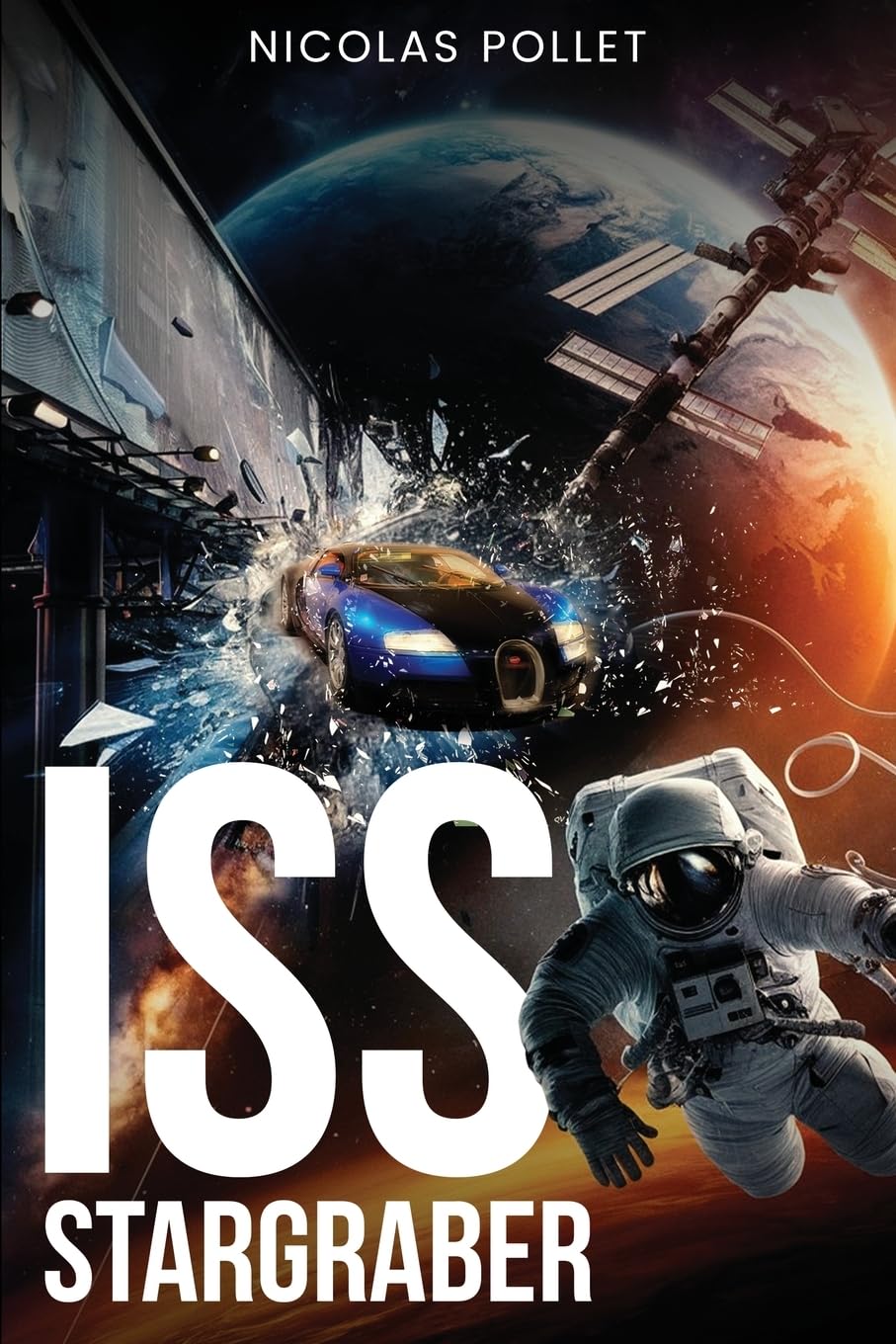
If you’re curious about what comes next for humanity, ISS Stargraber by Nicolas Pollet offers a chilling, intelligent, and immersive glimpse into that question. Read it for the science and stay for the suspense. And as you turn the final page, ask yourself one thing: What if it wasn’t an accident? Or what happens if one day it becomes reality? Will we be able to inhabit the sky?
Read ISS Stargraber by Nicolas Pollet to know more. Order your copy on Amazon: https://www.amazon.com/dp/B0F56P7XVR.