Here and there, science fiction succeeds not only in style and narrative but also in foretelling our true future. It doesn’t have to rely on aliens or intergalactic wars. Sometimes, all it takes is a believable projection of what tomorrow might look like. ISS Stargraber is that kind of story. It presents a world of complex systems, beautiful innovation, and immense risk. Most importantly, it feels real.
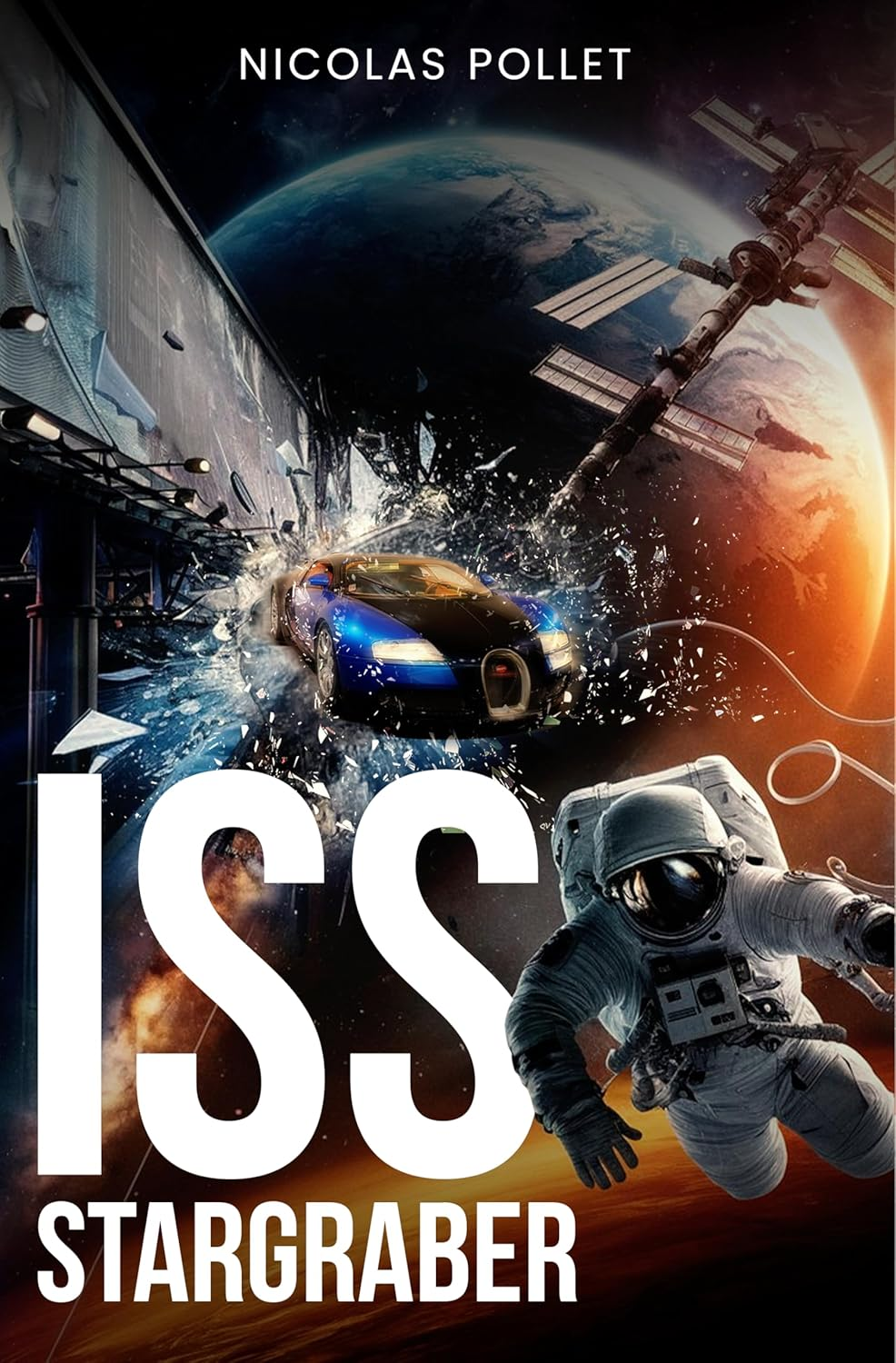
Set in the year 2153, the novel paints a picture of a world that has finally solved one of its greatest problems: energy. A massive orbital structure known as the Stargraber Geo Orbital Station circles the Earth. This colossal ring collects solar power in space and beams it down to Earth, creating a society no longer reliant on fossil fuels. Pollution has dropped, wars over oil have ceased, and energy is no longer a resource to fight over. It’s become a shared global good.
What makes this so compelling is how close it feels to where we are now. Orbital solar technology is not a fantasy. Space agencies and private companies are already testing systems that transmit energy wirelessly from orbit to Earth. NASA, the European Space Agency, and even corporations like Airbus have published models for satellite-based solar stations. Some prototypes are already collecting test data.
Stargraber also introduces orbital elevators. These are massive structures that move people and cargo between Earth and space using nanotube cables. This concept, once science fiction, has been explored in academic and aerospace circles for years. If materials science advances far enough, these elevators could drastically reduce the cost of space travel and make large-scale orbital construction possible.
Then there’s adaptive shielding, a technology in the book that protects the station from space debris and micrometeorites. Real-life research into self-healing materials and electromagnetic shielding is already underway, with implications for both defense and aerospace. In the book, this innovation allows for safe, long-term habitation in orbit.
But for all its brilliant tech and sleek design, ISS Stargraber offers a chilling reminder: technology alone doesn’t save us. These tools still need human systems, such as cooperation, trust, and governance, to function well. And when those systems start to break down, the consequences become deadly.
The novel follows John Desmond, head of security aboard the station, as he uncovers a series of unexplained accidents and failures.As he investigates his suspicions of sabotage, he discovers that the threat is political rather than technical.. People are using Stargraber’s systems for their own agendas, hiding sabotage under the guise of error. And if they succeed, the result could cripple Earth’s entire energy supply.
That is what makes ISS Stargraber such a compelling vision of the future. It’s not a dystopia. The world has achieved something beautiful. But it’s still fragile. It still depends on the integrity of the people maintaining it. And when corruption, personal gain, or ideology come into play, even the most advanced societies can fall apart.
The future in ISS Stargraber is not terrifying because it’s impossible. It’s terrifying because it’s so close to possible.
ISS Stargraber will appeal to readers who love thoughtful science fiction or stories that balance technological wonder with very human flaws. It’s part political thriller, part emotional drama, and entirely addictive. It is a work of near-future fiction that dares to envision a time when humans will be able to live in the sky.
If you’re looking for a smart, mature, and utterly compelling read, ISS Stargraber deserves a place on your shelf. It might just change the way you think about progress, systems, and survival.
Order your copy on Amazon: https://www.amazon.com/dp/B0F56P7XVR.