Human history has always been a story of invention. From fire to flight, every discovery has changed how we live, think, and survive. However, the faster we innovate, the more dangerous our brilliance becomes. As technology evolves faster than our sense of responsibility, one question rises above all others: can humanity truly handle its own genius? Nicolas Pollet’s ISS Stargraberconfronts this very idea, blending science fiction with a sobering reflection on what happens when progress outruns morality.
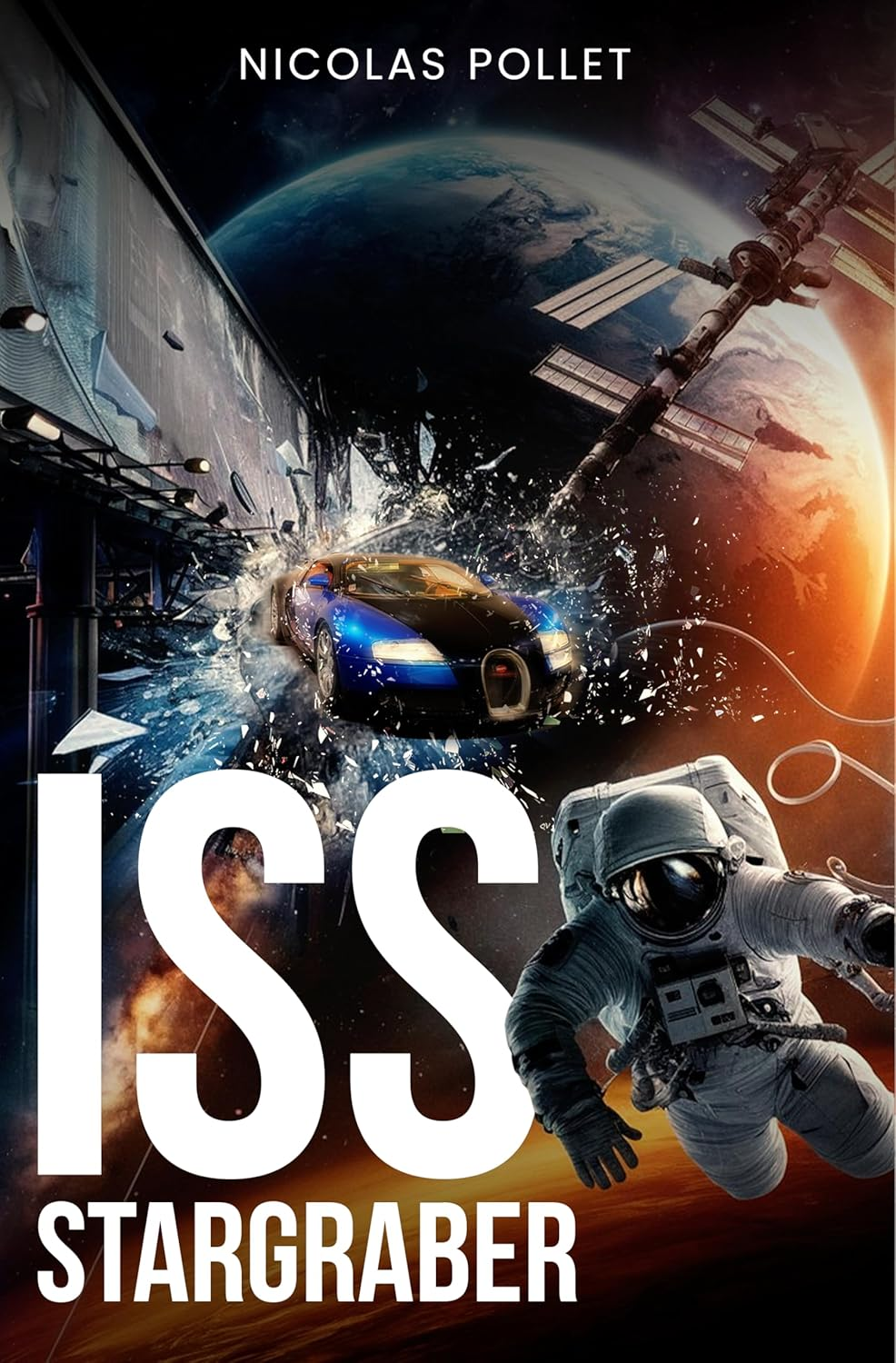
At the heart of ISS Stargraber lies a breathtaking vision of the future, a vast orbital station circling Earth, capable of transferring unlimited solar energy to the planet below. It is humanity’s crowning achievement, a testament to imagination, determination, and unity. However, this same creation becomes the stage for conspiracy, greed, and manipulation. The station, designed to end energy scarcity, transforms into a symbol of how human ambition can twist even the noblest inventions into instruments of power. In this way, Pollet’s story becomes more than a sci-fi adventure. It becomes a mirror reflecting our world’s growing struggle to balance innovation with ethics.
This theme feels strikingly familiar in today’s reality. Artificial intelligence, biotechnology, and space technology are advancing at a faster rate than most societies can adapt to. Machines can now write, paint, and make decisions once reserved for humans. Scientists can edit genes and reshape ecosystems. Private corporations plan to mine asteroids and colonize planets. But for all this brilliance, our ethical compass often lags. The same technologies that promise progress can also exacerbate inequality, distort the truth, or pose a threat to survival.
Pollet captures this moral tension perfectly in ISS Stargraber. His characters are not villains or heroes; they are human. They are scientists, engineers, and leaders who believe they are doing what is right, even as their choices push humanity closer to disaster. The antagonist, Mathias Bronski, represents this paradox: a man driven by intellect and conviction, yet blind to the destruction his vision will cause. His belief that he can “save” humanity by controlling it reflects the dark side of genius, the arrogance that comes from believing intelligence alone can justify any action.
The novel reminds us that intelligence without empathy is not progress; it is peril. Innovation must be guided by moral clarity, not merely by the thrill of discovery. History offers countless examples of this truth. The atomic bomb began as a scientific triumph but ended in tragedy. Social media was intended to connect people, but it has instead fueled division and misinformation. In each case, our brilliance outpaced our wisdom.
ISS Stargraber challenges readers to imagine what comes next. If humanity can create machines that think, or stations that power entire planets, can it also learn to think beyond profit and pride? Can we match our technical genius with the same depth of ethical understanding?
Pollet’s story suggests that the answer depends on us. The tools we build are neither good nor evil. It is how we use them that defines our legacy. ISS Stargraber is not just a thrilling space story; it is a call to reflection. For anyone fascinated by the crossroads of science, morality, and human ambition, this book is a timely and essential read. It asks the question we can no longer afford to ignore: are we ready to control the power we’ve created, or will it end up controlling us?
Get your copies from Amazon: https://www.amazon.com/dp/1967963231.