In 2025, the global conversation around energy is reaching a pivotal point. Why, you may ask? because the use of fossil fuels is gradually being replaced by wind, solar, and new nuclear technologies. One area, however, holds the potential to revolutionize clean energy: space-based solar power.
Recent advancements, such as the orbital solar trial conducted by Japan’s JAXA and Europe’s ESA in June 2025, have demonstrated the feasibility of collecting solar energy in space and beaming it wirelessly to Earth via microwaves or lasers. In space, solar panels operate with no weather interruptions. They get constant exposure to the Sun and far greater efficiency. The trials proved one key point: it works, at least on a small scale.
Now imagine scaling that idea up… to planetary proportions.
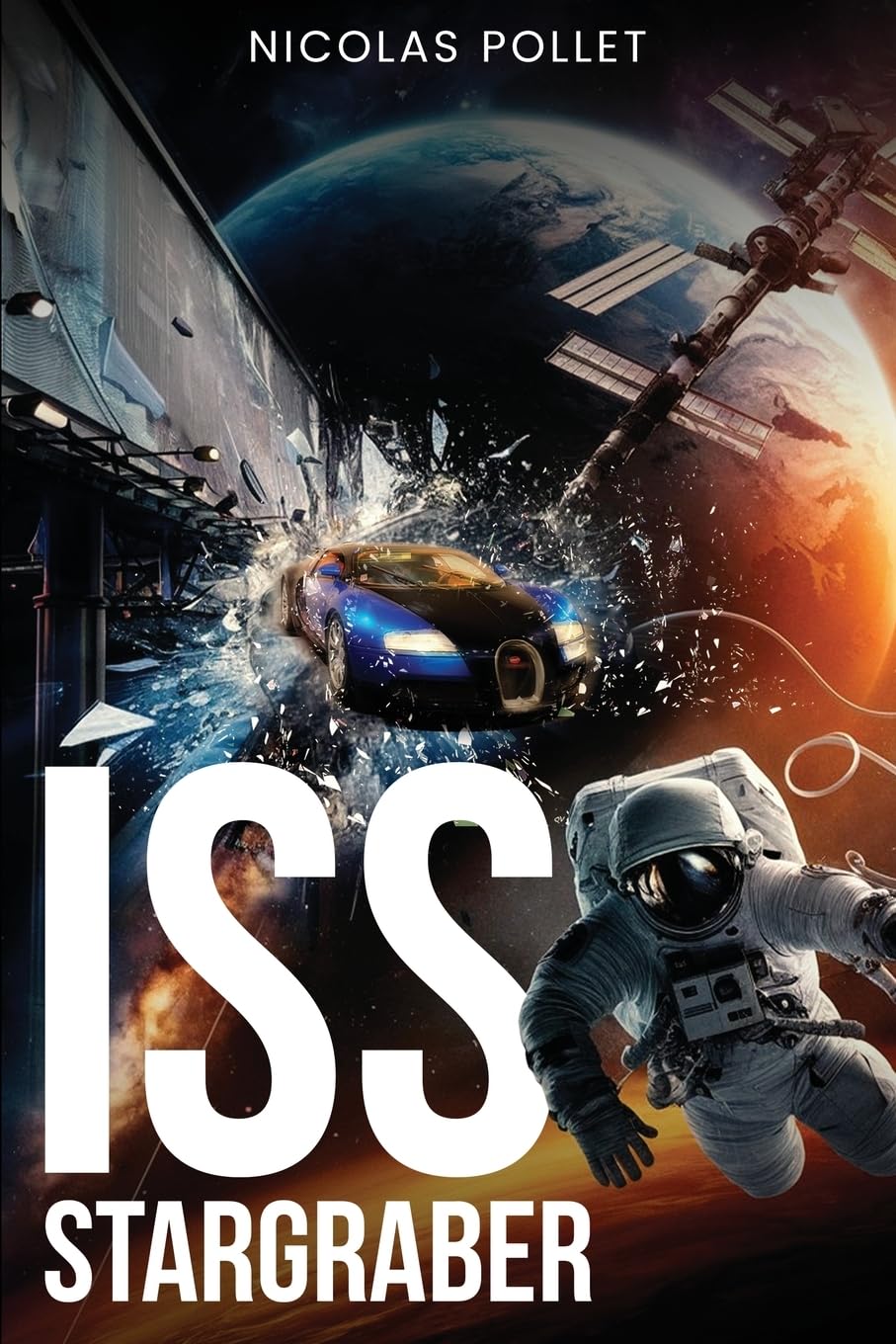
In science fiction, this dream is already fully realized. In Nicolas Pollet’s ISS Stargraber, Earth’s energy hunger has been eliminated by the construction of a 25,000-mile-long orbital ring known as the Stargraber Geo Orbital Station. Covered with adaptive solar panels, this megastructure collects and transmits solar energy 24/7, enabling a global shift to clean, wireless power. Energy is no longer sold—it’s shared. The environment is healing. Poverty is falling. Earth, for the first time in its history, is powered without combustion.
It sounds perfect. Almost too perfect.
In addition to producing energy, space-based solar power has the potential to create a truly global infrastructure. One that demands collaboration, breaks down barriers, and eradicates scarcity. But that’s where the danger is.
A single orbital grid that powers billions? That’s not just a marvel. It’s a target.
In ISS Stargraber, when strange malfunctions begin disrupting the station’s core systems, it becomes clear that someone or something is trying to bring it down. The implications are terrifying. Without the station, Earth is plunged back into chaos, its delicate ecosystem unable to support the new world order built on orbital energy.
The real world is already waking up to similar vulnerabilities. A 2023 report by the National Renewable Energy Laboratory (NREL) warns that even ground-based renewable grids are becoming increasingly exposed to cyberattacks and environmental sabotage. If a space-based system is ever constructed, its importance would be matched only by its fragility.
As we move closer to a sustainable future, the conversation around resilient infrastructure is more important than ever. What fail-safes would be in place if a satellite relay went offline? How would nations navigate ownership and sovereignty over space-based energy? And who would bear responsibility when something inevitably breaks?
ISS Stargraber isn’t just a sci-fi thriller. It’s a glimpse into a future we’re already building, where space isn’t just for telescopes and rovers, but for solving Earth’s deepest problems.
In short: if you’re curious about where solar technology and suspense collide, this book delivers on both fronts.
Space-based solar power may well be a reality by 2153. Whether it will save or bring new dangers, it is up to us.
For more information and insight, please read ISS Stargraber.
The book is available on Amazon for purchase: https://www.amazon.com/dp/B0F56P7XVR.