When it comes to humanity’s most magnificent engineering and technological development, we cannot overlook the International Space Station (ISS). It is a collaboration between NASA (United States), Roscosmos (Russia), ESA (Europe), JAXA (Japan), and CSA (Canada). The ISS has operated continuously since November 2000, and it has hosted more than 250 astronauts from over 20 nations. Isn’t it remarkable? But as the station enters its third decade of service, there comes the question of its safety and long-term viability.
Could the ISS be in danger?
The short answer is yes. The threats are real, varied, and in some cases growing.
The ISS was originally intended to last 15 years. However, with construction beginning in 1998 and major modules added through the early 2000s, today, the station is more than 25 years old. Despite extensive upgrades and ongoing maintenance, structural aging is a growing concern.
In 2021, Russian cosmonauts discovered superficial cracks in the Zarya and Zvezda modules—some of the oldest components on the station. These stress fractures, though not immediately catastrophic, were described by Vladimir Solovyov, flight director for the Russian segment of the ISS, as a sign that “a large number of elements have started to deteriorate.” Microgravity, radiation, and thermal cycles accelerate wear on metals, seals, and composite materials. Maintaining the pressurization, life support, and thermal control systems has become increasingly expensive and labor-intensive.
NASA has plans to transition to commercially operated stations by 2030, but until then, the ISS remains the primary orbital research platform. Its aging structure, however, will continue to pose both safety and operational risks.
One of the most dangerous threats to the ISS is orbital debris. Well, according to NASA’s Orbital Debris Program Office, more than 27,000 tracked objects and millions of untracked fragments are currently orbiting Earth. Even a 1 cm piece of debris traveling at 7.8 km/s (over 17,000 mph) can damage or penetrate critical ISS components.
The station has maneuvered to avoid collisions more than 30 times since 1999, with close calls increasing in frequency. In November 2021, for example, astronauts aboard the ISS were ordered to shelter in spacecraft after Russia destroyed one of its own satellites in a test, generating over 1,500 trackable debris pieces. The cloud passed dangerously close to the ISS’s orbit, demonstrating how quickly new threats can emerge.
Despite shielding designed to protect against micrometeoroids and debris, the station remains vulnerable to strikes that could damage power arrays, cooling systems, or life-support components.
As with all modern infrastructure, the ISS depends heavily on software and data networks. In 2008, a computer virus known as “W32.Gammima.AG” was found on a laptop aboard the station, brought there via USB. Although harmless in that case, it proved that vulnerabilities exist in even highly secured environments.
With increasing geopolitical tensions and the strategic value of space-based assets rising, the ISS and future stations could be seen as targets. Moreover, military interest in anti-satellite technology has grown in the past decade as multiple nations, including Russia, China, and the U.S., have tested kinetic anti-satellite weapons. While such weapons are not designed to target the ISS, their use generates debris that directly threatens orbital infrastructure.
Highly trained astronauts staff the ISS. But space remains an extreme environment. Medical emergencies, though rare, can be serious. There is no dedicated operating room or surgical equipment onboard. Telemedicine and trained personnel help mitigate risk, but the closest hospital is still hours—or even days—away, depending on orbital position and emergency protocols.
Human error is another factor. In 2018, a leak in the Soyuz spacecraft docked to the ISS led to a pressure drop, traced to a drilled hole in the hull. While repaired safely, the incident sparked concerns about sabotage and quality control, and remains controversial today.
As humanity’s reliance on space grows, particularly for communications, energy, and navigation, understanding these vulnerabilities is essential.
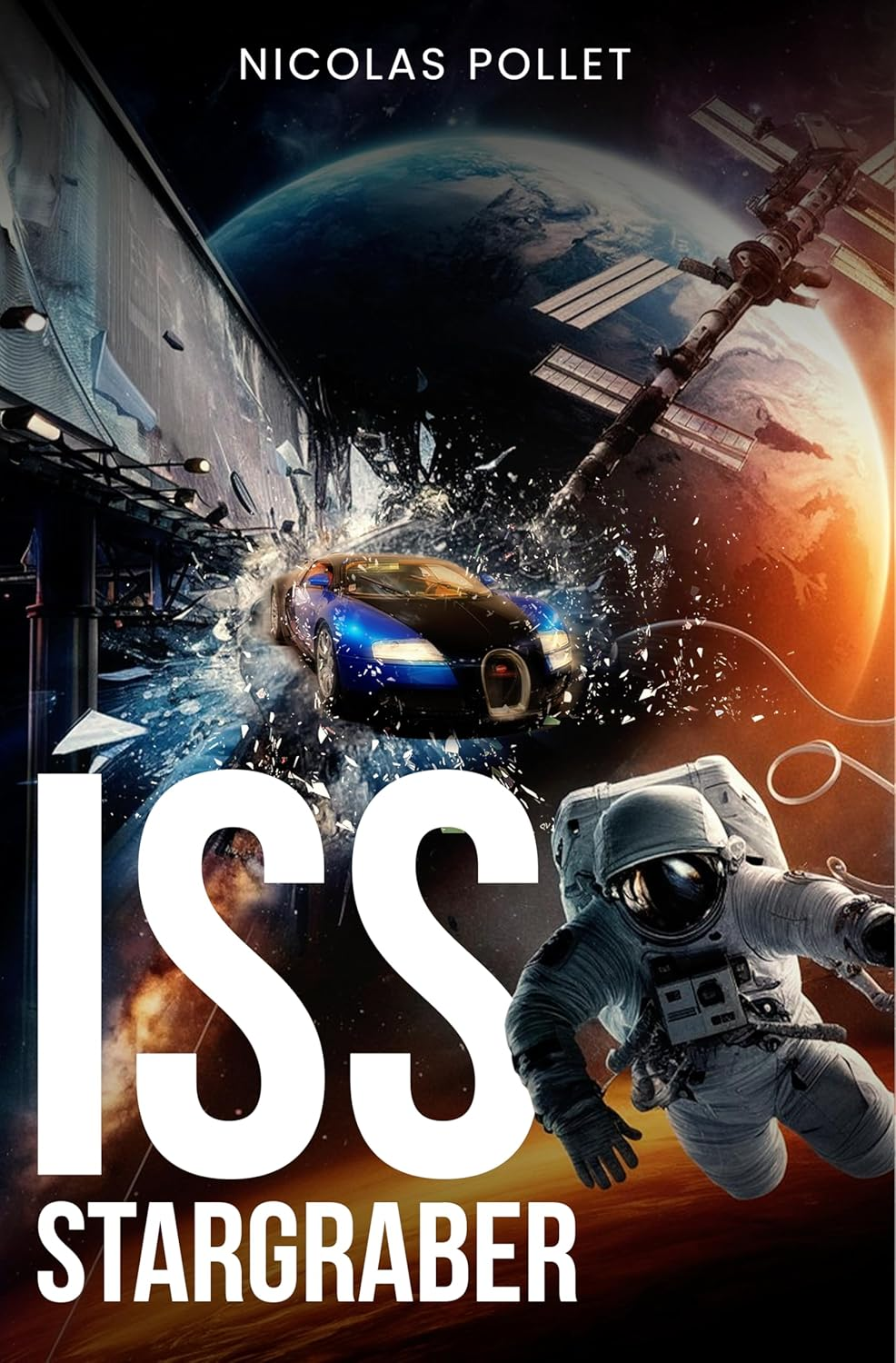
This conversation is precisely what makes ISS Stargraber, a novel by Nicolas Pollet, both timely and thought-provoking. Set in the year 2153, the story explores a future where humanity has successfully built the ISS Stargraber Geo Orbital Station. It is a sprawling, 25,000-mile ring around Earth, responsible for collecting solar energy and transmitting it to the planet.
But this future marvel, much like today’s ISS, is not immune to failure or foul play. When sabotage threatens the station’s systems, one man must confront the fragile intersection of grief, technology, and human ambition.
While ISS Stargraber is fiction, it echoes a very real truth: no system, no matter how advanced, is beyond danger. Whether through debris, design flaws, human conflict, or simple entropy, the vulnerabilities we see today could define the challenges of tomorrow.