Science fiction has a reputation for dreaming big. Faster travel, endless energy, and machines that solve every problem humanity has ever faced. Yet the most interesting ideas are not the wildest ones. They are the ones that make you pause and think, This could actually happen.
Energy is a perfect example. Many stories invent miracle fuels that appear out of nowhere. They work instantly and never fail. Those ideas can be entertaining, but they rarely stay with the reader. What stays with us are energy solutions that feel grounded in reality, solutions that come with benefits, risks, and consequences. Solar energy collected in space is one such idea.
The basic science already exists. Satellites today use solar panels to power themselves. Scientists have long discussed the idea of collecting solar energy outside Earth’s atmosphere, where sunlight is constant and uninterrupted, then transmitting that energy back to the planet. The challenge is not whether it works; the challenge is whether it works. The challenge is scale, control, and safety.
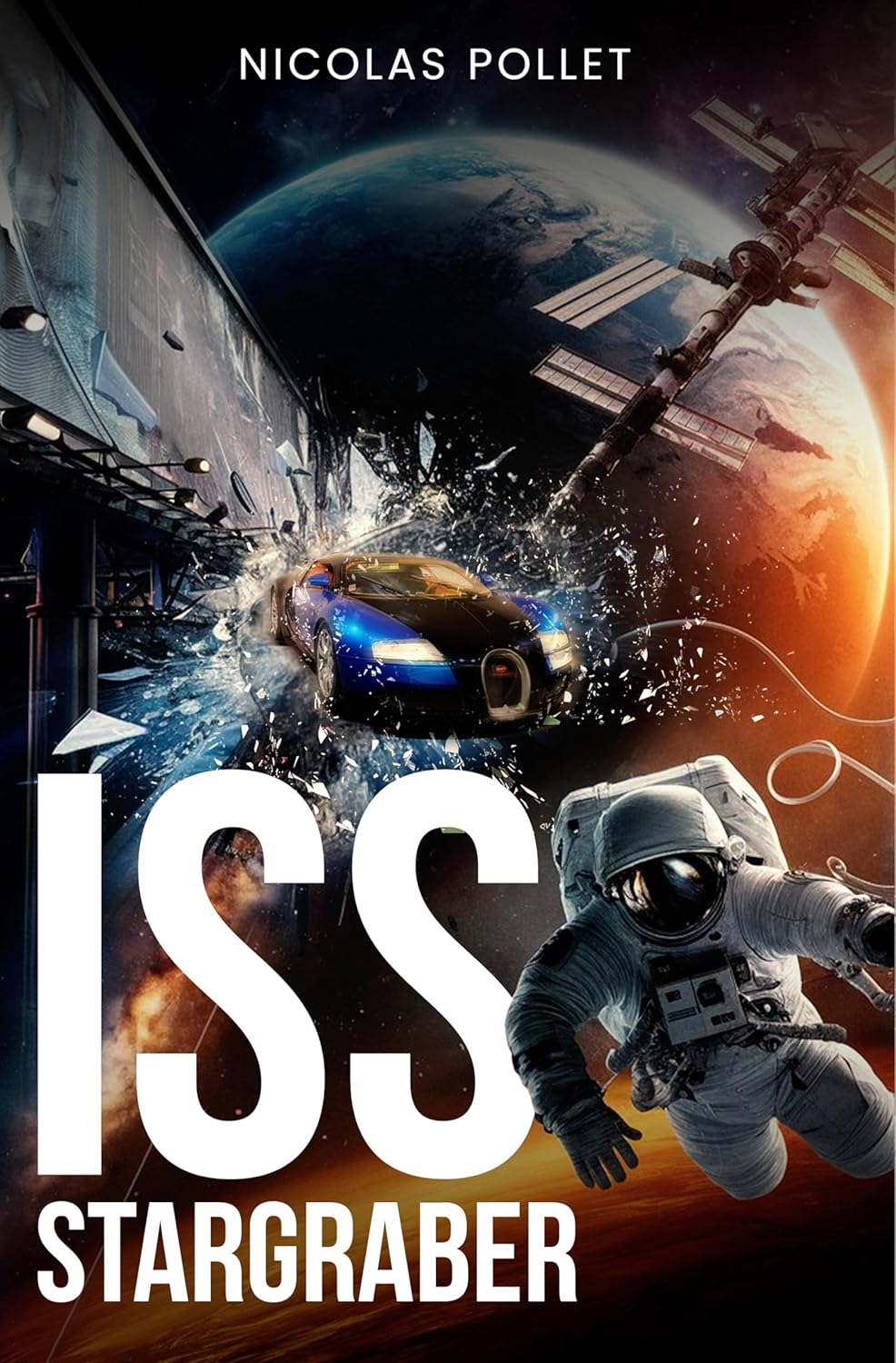
A story like ISS Stargraber imagines a future where humanity finally solves the energy problem by building massive orbital infrastructure. Energy becomes abundant and cheap. Earth stops burning itself to survive. On paper, this appears to be the best possible outcome.
But energy does not exist in isolation. Whoever controls energy controls stability, politics, and survival. Even a clean system can be abused if it is centralized and powerful enough. A malfunction, a mistake, or a deliberate act can ripple across the entire planet.
Another plausible energy concept often explored in fiction is large-scale energy storage. In the real world, storing energy is just as important as generating it. Batteries, thermal storage, and even underground systems are already being developed. Fiction pushes this idea forward by asking what happens when storage systems become critical infrastructure. We are aware that energy grids are already failing, and blackouts are occurring more frequently than ever. The difference is scale. As systems grow larger, the consequences of failure also grow in proportion.
What makes plausible energy fiction compelling is not the technology itself. It is how humans interact with it. Who makes the decisions? Who is trusted? Who is ignored? Who pays the price when something goes wrong?
In ISS Stargraber, the technology feels believable because it is treated like infrastructure, not magic. It requires maintenance. It depends on people. It can be misunderstood, misused, or manipulated. The tension does not come from impossible science. It comes from human choices.
That is why stories like these matter. They allow us to explore future energy solutions without pretending they are perfect. They let us imagine progress without forgetting responsibility.
If you enjoy science fiction that respects science while focusing on people, power, and consequences, ISS Stargraber by Nicolas Pollet is well worth your time.
As the sabotage plot unfolds and Desmond fights against time, the stakes rise not just for the station but for the world. If Stargraber falls, Earth may follow. And no one, not even the people in charge, knows how to stop it.
In the end, ISS Stargraber is an urgent, thrilling, and thought-provoking read. It’s for fans who love their science fiction grounded, their characters complex, and their suspense nerve-wracking. Pollet has created something special here: a future that feels all too close and a story that refuses to let go.
If you’re ready to orbit the edge of catastrophe and question everything we trust to keep us alive, then ISS Stargraber is your next must-read.
Availability:
The book is available on Amazon for purchase: https://www.amazon.com/dp/B0F56P7XVR.