Not long ago, the question “Are we alone in the universe?” was almost entirely a matter of speculation. Today, it is becoming a matter of science, thanks to advanced telescopes like the James Webb Space Telescope (JWST). Now, with new space technologies and powerful telescopes, we are beginning to learn more about planets that orbit stars far beyond our solar system. One of the most promising targets is TRAPPIST-1d. It is a rocky world in a star system about 40 light-years away.
TRAPPIST-1 is home to seven known planets, all of which are roughly Earth-sized. Several of them sit in the star’s habitable zone. This means that temperatures here could allow liquid water to exist. TRAPPIST-1d has drawn attention because it appears to have the right conditions for supporting life, which means that, compared to many other planets we have found, it has more of the basic elements needed for life.
Recent observations from the JWST have given us a closer look at the planet’s atmosphere. By studying the way starlight filters through it during a transit, astronomers are able to detect the chemical fingerprints of gases like oxygen, carbon dioxide, and methane. These gases can be produced by both geological and biological processes. But finding them in certain combinations could hint at life.
The latest data suggests that TRAPPIST-1d may have a thin atmosphere and traces of carbon dioxide. There is no confirmation of water vapor yet. Still, the search is ongoing. Every pass of the JWST adds more detail, narrowing down what is possible and what is not. While we are not at the point of declaring TRAPPIST-1d “another Earth,” it remains one of the most promising candidates for further study, as the implications go beyond curiosity.
If we find life or even strong signs of habitability on TRAPPIST-1d, it would change our understanding of the universe and our place in it. It would also raise new questions about the future. Could humans one day live there? What kind of technology would be needed to travel 40 light-years? How would we adapt to an entirely different environment?
While visiting TRAPPIST-1d in person may be centuries away, the work of building sustainable human habitats closer to home has already begun. For instance, large-scale orbital stations, lunar bases, and Mars settlements are being discussed seriously, with some projects already in early stages.
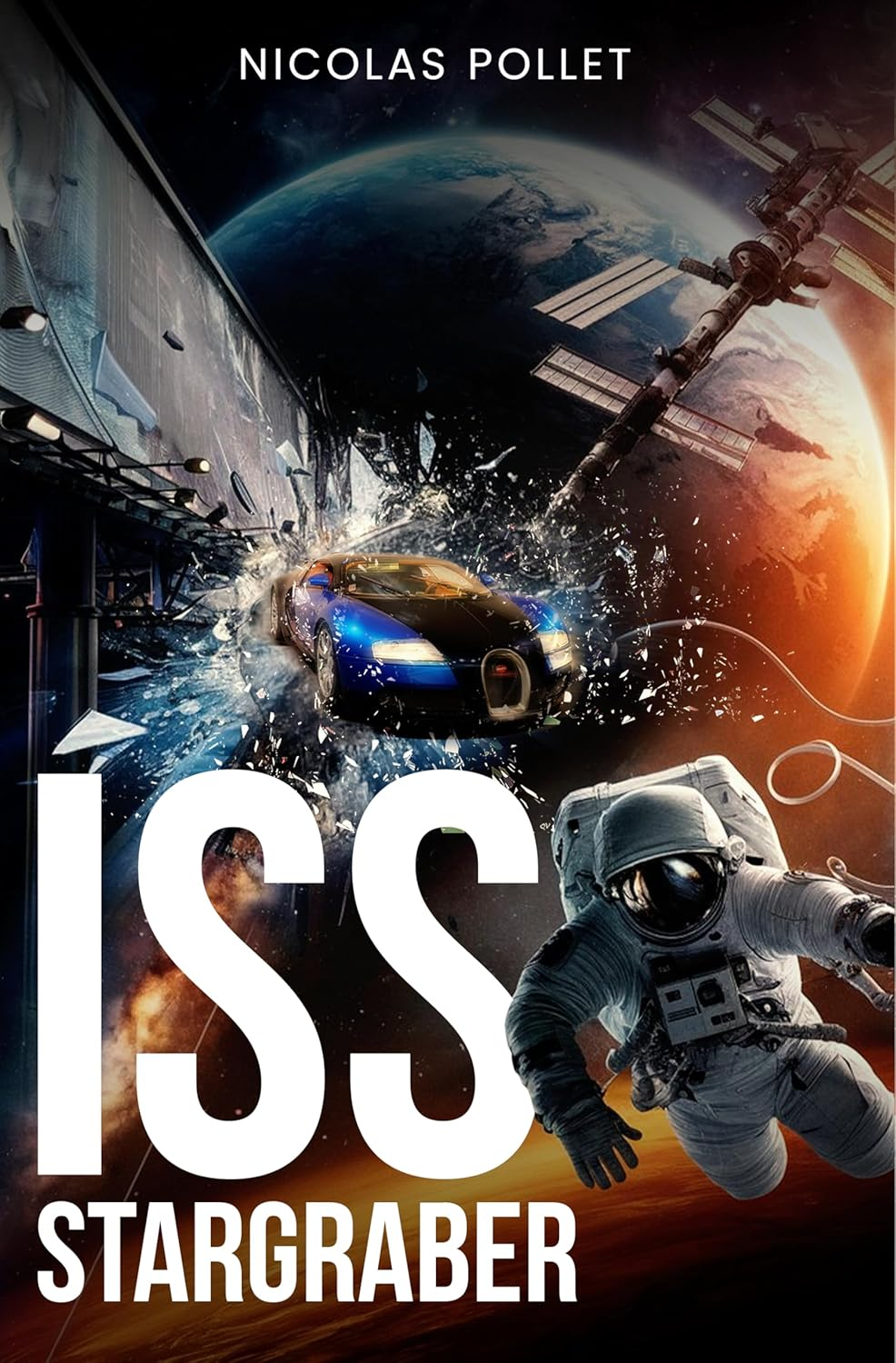
This is where fiction can help bridge the gap between imagination and possibility. In ISS Stargraber by Nicolas Pollet, readers are transported to 2153, when humanity has built a 25,000-mile-long orbital station that provides clean energy to Earth. It is not TRAPPIST-1d, but it is a vision of how humans could build permanent life-support systems in space. For readers fascinated by exoplanets and the search for new worlds, it offers an engaging look at the challenges and risks of living beyond Earth.
Here is a link to purchase this book: https://www.amazon.com/dp/B0F56P7XVR.
The exploration of TRAPPIST-1d may or may not reveal life, but it will certainly reveal more about what it takes for life to exist. As we learn, we will continue to imagine and perhaps someday build the places where humanity could thrive among the stars or above the ground before it could collapse.