Some science fiction novels focus on spectacle. Others focus on ideas. ISS Stargraber by Nicolas Pollet succeeds because it understands that neither matters without people at the center. This is not a story that relies on noise or constant action to hold attention. Instead, it builds tension through choices, responsibility, and the slow realization that progress often comes with consequences we are not prepared to face.
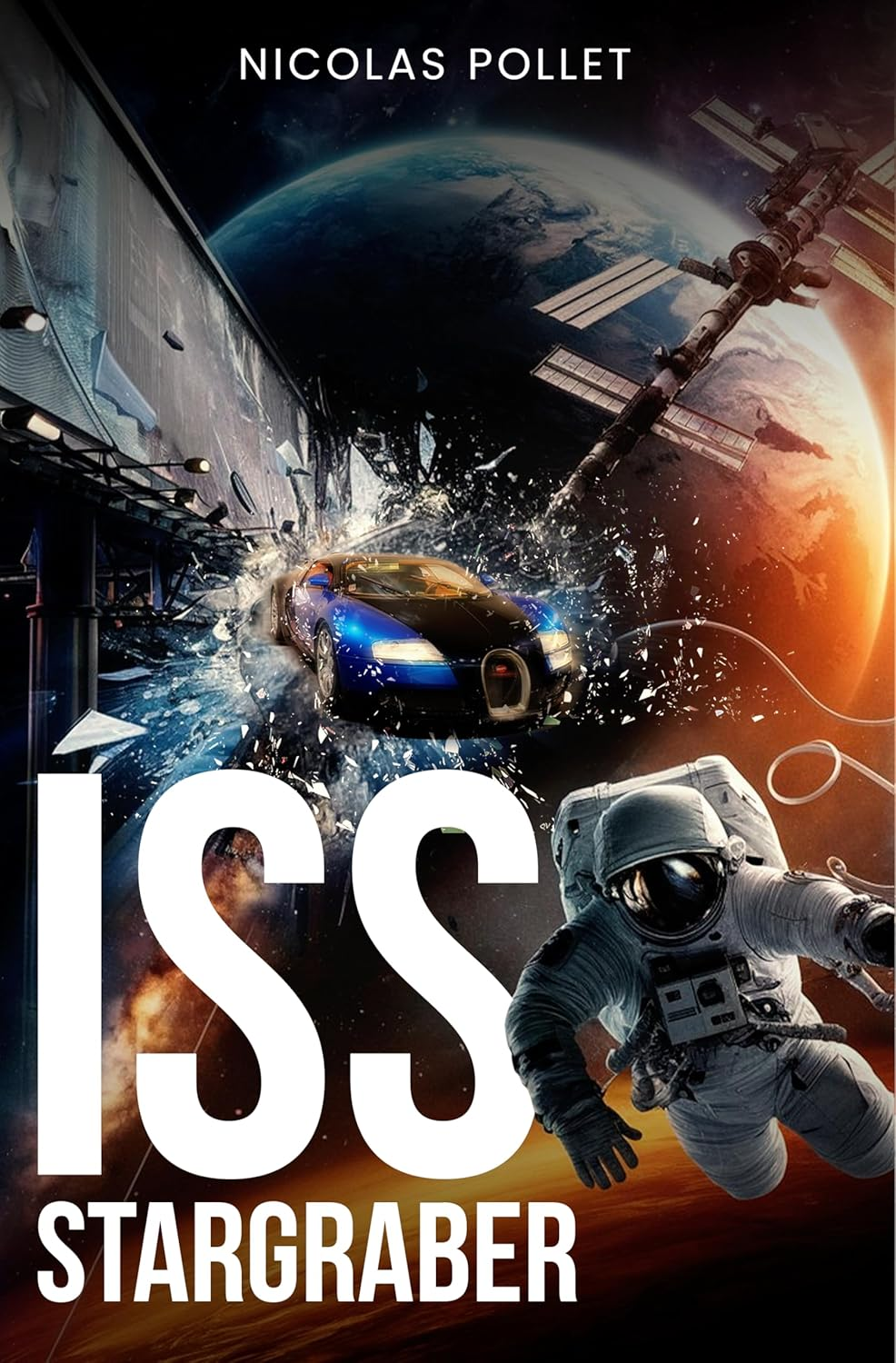
The novel is set in 2153, a time when humanity depends on the Stargraber Geo Orbital Station for its energy needs. The station is massive, encircling much of Earth and collecting solar power that keeps the planet running. On paper, it is a solution to global instability. In practice, it becomes a fragile system held together by politics, secrecy, and competing interests.
At the heart of the story is John Desmond, a security officer tasked with protecting the station. He is not written as a flawless hero or a larger than life figure. He feels grounded and human. John carries the weight of past decisions, and that emotional history shapes how he reacts when things begin to go wrong. His role forces him into moral gray areas where doing the right thing is never simple.
What makes ISS Stargraber compelling is how it treats technology as neither villain nor savior. The station itself is not evil. It is a tool. The danger comes from how people use it and how power gathers around it. As sabotage threatens the station, the story shifts from a technical mystery to a question of trust. Who benefits from the system, and who is willing to risk everything to control it?
Victoria Palmers adds another layer to the narrative. Her discovery of a hidden threat is not framed as a heroic accident, but as the result of curiosity and competence. She represents the people who keep massive systems functioning while rarely being acknowledged. Through her perspective, the novel explores how overlooked individuals often see problems long before those in charge.
Pollet’s writing avoids unnecessary complexity. The science feels researched but accessible. Readers are not overwhelmed with explanations. Instead, information appears naturally through action and dialogue. This makes the world feel lived in rather than explained. The pacing is steady, allowing tension to grow without rushing important moments.
One of the strongest elements of the book is its focus on ethical tension. Energy control becomes a stand in for modern anxieties about dependency and authority. The novel asks uncomfortable questions. What happens when one structure becomes too important to fail? Who decides how much risk is acceptable when the stakes involve an entire planet?
ISS Stargraber does not offer easy answers. That is part of its strength. It respects the reader enough to leave space for reflection. By the final chapters, the story feels less like a distant future and more like a warning shaped by current trends.
This is a thoughtful, restrained, and engaging science fiction novel. Readers who value character-driven stories and meaningful stakes will find much to appreciate. ISS Stargraber proves that the most compelling science fiction is not about how far humanity can reach, but about whether it understands the cost of what it builds.
In the end, ISS Stargraber is an urgent, thrilling, and thought-provoking read. It’s for fans who love their science fiction grounded, their characters complex, and their suspense nerve-wracking. Pollet has created something special here: a future that feels all too close and a story that refuses to let go.
If you’re ready to orbit the edge of catastrophe and question everything we trust to keep us alive, then ISS Stargraber is your next must-read.
Availability:
The book is available on Amazon for purchase: https://www.amazon.com/dp/B0F56P7XVR.