John Desmond had learned to trust the rhythms of the ISS Stargraber. The hum of the generators. The steady pulse of the status lights. The quiet vibration that moved through the station’s rings like a heartbeat. But tonight the rhythm broke. A faint pulse of failing light caught his attention, a small detail that should not have meant anything, yet it did. The system report on his console blinked once, then disappeared, as if wiped clean by an unseen hand.
He tapped the screen again. Nothing. A third time. Still nothing. The station had never behaved like this. When the outer modules flickered for the second time, John felt a cold weight settle in his stomach. Someone, somewhere, was doing something they should not be doing. And whatever it was, it had just begun.
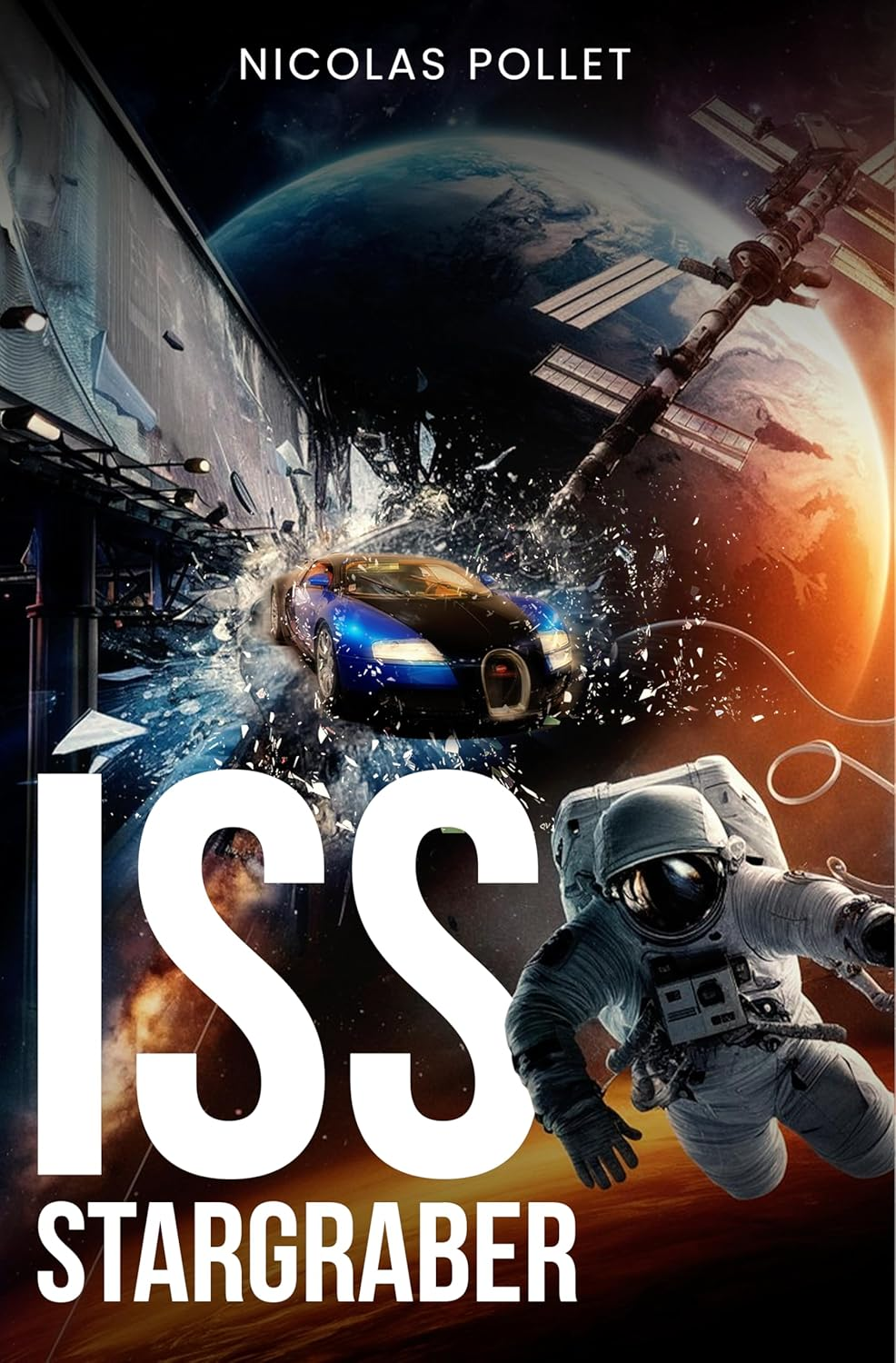
Most science fiction thrillers focus on either action or world building, but ISS Stargraber by Nicolas Pollet finds a rare middle ground. It delivers a gripping mystery while also painting a future that feels realistic and grounded. The result is a story that does not rely on spectacle. Instead, it grows tension through quiet moments, human instincts, and the unsettling realization that even the most advanced systems can break when the wrong person decides to push them.
The book takes place in the year 2153, when Earth has solved much of its energy crisis through a massive orbital station that surrounds the planet. This structure, the ISS Stargraber, provides clean energy to Earth and symbolizes unity between nations. It is humanity’s greatest achievement. Yet it is also its greatest risk, because if something were to go wrong, the entire planet would feel the impact.
John Desmond serves as the head of security, and his role is central to the story. Pollet portrays him with a balance of strength and vulnerability. John is experienced, observant, and committed, but he is not perfect. His past haunts him. His emotions interfere at times. And his growing suspicion that the station is being targeted places him in a difficult position. He must act on incomplete information while trying to prevent mass panic.
The mystery surrounding the sabotage is handled with careful pacing. Instead of large dramatic events, the book presents a slow buildup of clues. Small malfunctions. Strange readings. Places where the logs do not match the physical evidence. Through these details, Pollet builds an atmosphere where nothing feels fully safe. Even the station’s size becomes part of the problem. A structure that wraps around Earth is nearly impossible to monitor in full. There are always places where someone can hide.
Victoria, the geochemist who becomes John’s closest ally, adds another layer to the story. She is scientific, clear thinking, and not easily intimidated. Their partnership helps the plot stay grounded. Rather than relying on dramatic speeches or forced conflict, their relationship develops through shared observations and the growing realization that the situation is worse than they expected.
Pollet also weaves in political tension, showing how different nations and departments view the station with competing interests. Some want control. Some want credit. Some want to hide the truth. This human conflict creates realistic pressure that increases the difficulty of discovering the real threat.
One of the novel’s strengths is its focus on systems. Readers who enjoy stories about engineering, energy, and infrastructure will appreciate how the Stargraber functions. Nothing feels magical. Everything seems built on principles we know today, expanded into a believable future. This makes the threat more unsettling because the failures described could happen in a real system under the wrong circumstances.
As the story moves forward, the stakes rise steadily. John is forced to make difficult decisions, and the true scale of the danger becomes clear. By the final chapters, the tension becomes intense as the risk expands from isolated malfunctions to a threat that could affect all life on Earth.
ISS Stargraber is not just a story about sabotage in space. It is a story about responsibility, trust, and the limits of human control. It asks what happens when the world relies on a single structure and what could occur if that structure begins to fail.
For readers who enjoy science fiction grounded in realistic technology and driven by human suspense, this novel offers an engaging and thought-provoking experience. It keeps curiosity alive from the first pages to the last, making you want to see how John Desmond will address a threat that grows larger with every turn of the page. It is a strong, focused, and memorable story worth reading.
Get your copies from Amazon: https://www.amazon.com/dp/1967963231.