Inspired by the world of ISS Stargraber
They called it humanity’s crowning glory. A monument not carved in stone or steel but orbiting above the Earth in silence. It is a lifeline that shimmered like a silver halo encircling the planet like a doughnut. Yes, we are talking about the megastructure“The Stargraber Station.”
In ISS Stargraber, Nicolas Pollet constructs a future where human ingenuity reaches its zenith. A 25,000-mile orbital space station, part city, part energy hub, powers the entire planet using clean solar energy beamed down from the void. Poverty is on the decline. Fossil fuels are a relic of the past. Energy is free. It is, by every definition, our greatest achievement.
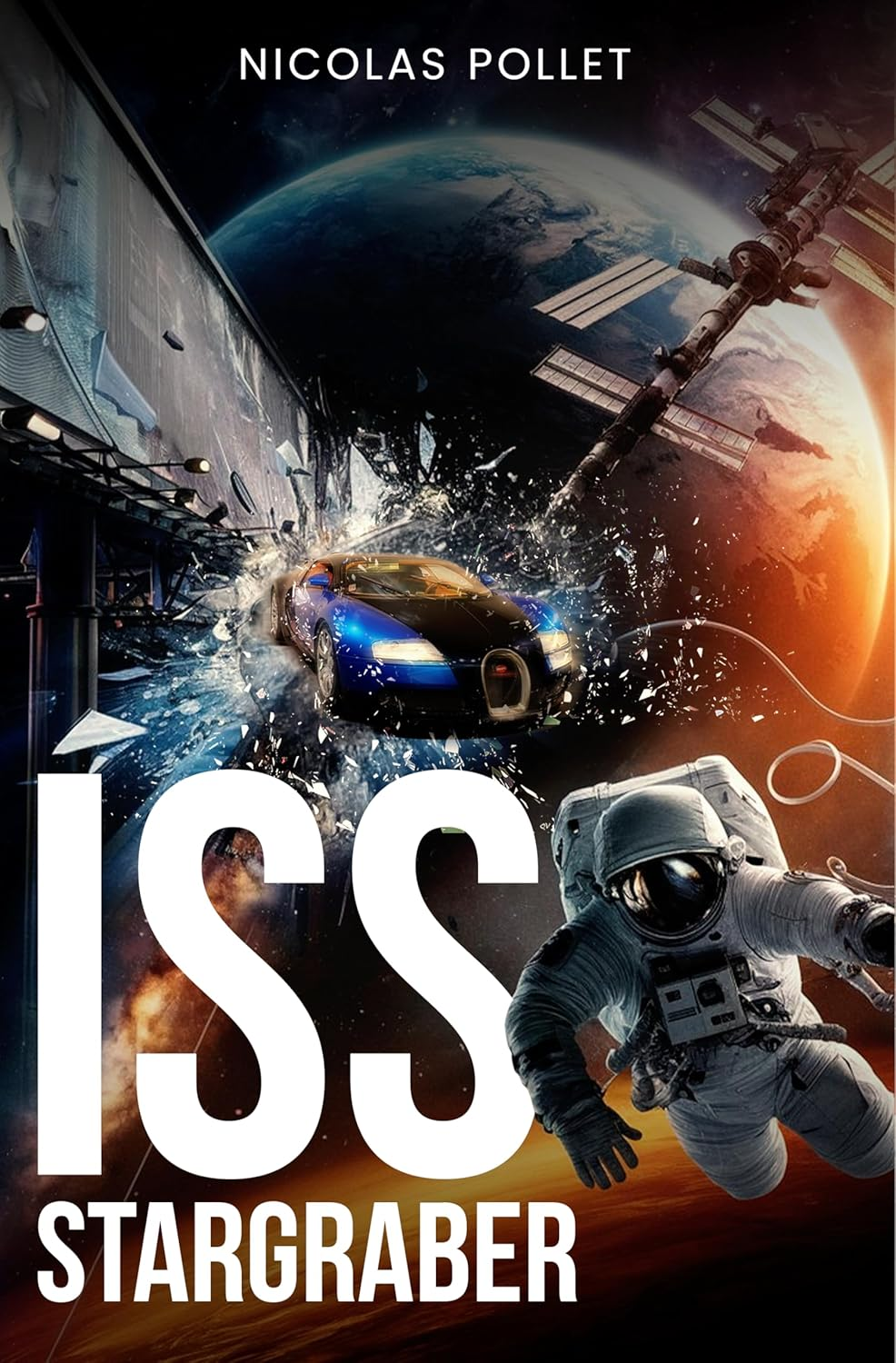
But what happens when the thing meant to save us becomes the very thing that could destroy us?
Because of this, ISS Stargraber reads like a heartbeat on the verge of a panic attack. Because there is a terrifying reality hidden behind the glistening panels and miraculous technologies: one coordinated attack, one system failure, or one act of sabotage could bring about anarchy on Earth.
John Desmond, a grieving veteran turned security chief, is the unlikely guardian of the station. When an old friend suffers a mysterious accident, what first seems like a mechanical failure turns into a web of deception, danger, and global stakes. The deeper Desmond digs, the more he uncovers not just flaws in the system but flaws in the people who control it.
And that’s the thriller at the core of the story: not that Stargraber might fall, but that someone might make it fall.
The novel invites us to examine a haunting premise. It challenges us to consider what happens when we create wonders that are so big, intricate, and essential to our survival that we also put ourselves in danger. The very scale of progress becomes its own vulnerability. Like a tower built too tall, the higher we rise, the harder we fall.
From the inside, Stargraber is a marvel. Self-sustaining, technologically advanced, filled with brilliant minds and hopeful pioneers. But it’s also a closed ecosystem. A floating metropolis filled with secrets. And when those secrets turn toxic, no one can run. There’s no backup plan when the grid that powers the world is targeted.
Pollet’s narrative is rich with tension. It is not just because of what’s at stake but because the story feels so close to reality. As we edge into an era where technology interlaces every part of daily life, from AI to renewable energy to space travel, the book prompts us to ask how resilient we are if we were ever to be able to build such a technological marvel or how prepared we are for betrayal, failure, or attack.
It’s easy to marvel at Stargraber and fall in love with the vision of humanity united in a common cause. But it’s even easier to forget that unity can fracture, that systems can be hacked, and that the greatest threat to innovation often comes not from outside but from within.
ISS Stargraber isn’t just a sci-fi thriller. It’s a warning wrapped in adrenaline. A question wrapped in silence: what if our brightest future becomes our darkest moment? And more importantly. Who would you trust to stop it?
ISS Stargraber is a gripping sci-fi thriller set in 2153 aboard the Stargraber Geo Orbital Station, a colossal 25,000-mile-long megastructure encircling Earth. This marvel of human ingenuity powers a fossil-fuel-free world with limitless solar energy, but its utopian promise hides a deadly threat. John Desmond, a former Navy pilot turned security chief, grapples with personal loss while uncovering a conspiracy that could annihilate billions. Joined by Victoria Palmers, a brilliant geochemist, John races against time to stop an elusive adversary bent on catastrophic destruction. Pollet weaves high-stakes action, plausible tech-like space elevators, and raw human emotion into a page-turner that explores duty, sacrifice, and the fragile line between progress and peril.
This novel is perfect for fans of The Expanse and Project Hail Mary. It will keep you hooked until the final orbit.