Imagine looking up at the sky and seeing a magnificent orbital ring. Much like Saturn’s rings, these massive rings would appear as a crown jewel to Earth’s outer atmosphere and would give us a remarkable view 24/7. But, but but… this idea of an orbital ring around Earth sounds unreal. A structure circling the planet, suspended above the surface, connecting nations and systems in space. It feels like something far beyond our reach.
An orbital ring would not just be a structure. It would be infrastructure on a planetary scale. It would change how we move, how we generate energy, and how we think about Earth itself. Space would no longer feel distant. It would become part of everyday life.
The science behind such a structure is complex, but not impossible. Concepts like orbital elevators, rotating habitats, and large-scale space construction are already being studied seriously. Materials are improving. Robotics is advancing. Automation is growing more precise. What seems unreachable today may become feasible tomorrow.
An orbital ring would likely become the backbone of energy production, transportation, and communication. It would be too important to fail and too powerful to ignore. That level of importance brings political tension. Different nations would want influence. Corporations would want access. Security would become a constant concern.
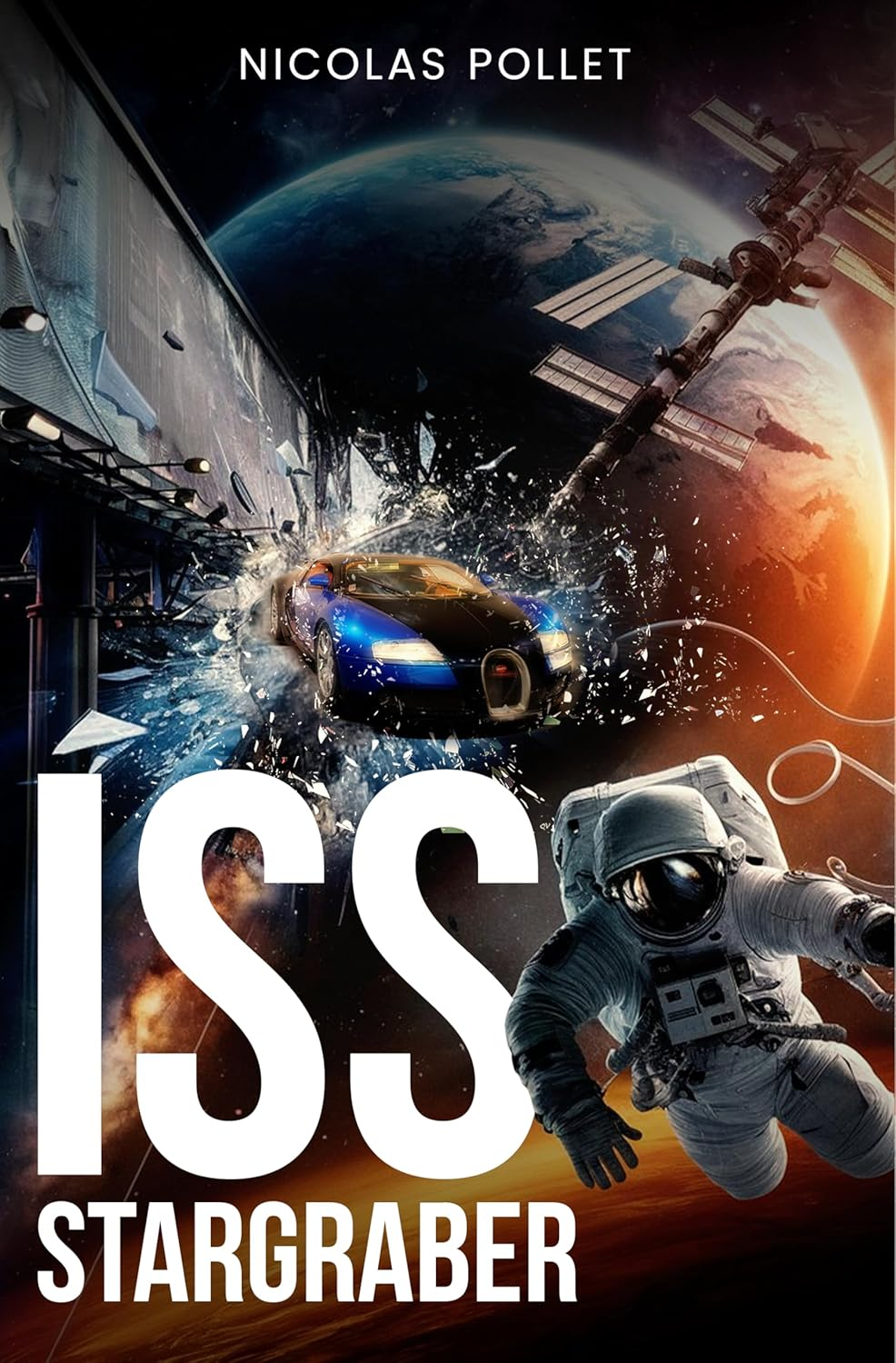
ISS Stargraber explores this reality through the concept of a massive orbital station directly tied to Earth’s energy needs. The station is not just a marvel. It is a responsibility. Every system failure, every human error, carries weight far beyond the station walls.
Living and working on a structure that wraps around the planet would also change how people see Earth. From that perspective, borders lose meaning. Conflicts look smaller. At the same time, distance from the surface could create emotional and ethical detachment. Decisions made in orbit can affect millions on the ground.
There is also the question of trust. When daily life depends on a structure you cannot see or touch, you must trust the people who run it. Trust that they are competent. Trust that they are honest. Trust that they are not hiding anything.
An orbital ring would also blur the line between civilian and strategic infrastructure. Energy systems, transport routes, and security would overlap. Any disruption could be seen as an attack, even if accidental. The potential for fear and escalation would always be present.
This is why stories about orbital structures resonate. They are not really about metal and machines. They are about scale. About responsibility. About how human flaws do not disappear just because technology improves.
ISS Stargraber does not treat an orbital system as a symbol of perfection. It treats it as something fragile because humans are involved. That honesty is what makes the story feel real.
If you find yourself wondering what life might look like with humanity living and working above the planet and what could go wrong along the way, reading ISS Stargraber by Nicolas Pollet offers a thoughtful and engaging exploration of that future.
High above Earth, the ISS Stargraber Station silently powers the world below… until sabotage threatens to bring it all crashing down. Who is the culprit lurking in the shadows of the ISS Stargraber? Who would dare to dismantle humanity’s greatest achievement? As systems begin to fail and lives hang in the balance, only one man, John Desmond, stands between global catastrophe and survival. Can he uncover the truth before it’s too late—and can he save us all from the abyss? ISS Stargraber is a tense, unmissable journey into the heart of a mystery that could end everything.
Head to Amazon to purchase your copy: https://www.amazon.com/dp/B0F56P7XVR.