Humanity has always dreamed of rising above the ground and building new worlds in the sky. From ancient myths to modern engineering, the idea of living above Earth has captured imaginations for centuries. Today, with advances in aerospace technology, solar energy, and orbital engineering, the possibility of creating permanent settlements in the sky no longer feels like pure fantasy. It feels like a future that might be closer than we once believed.
Imagine a world in which space is not only for astronauts but also for families, scientists, workers, and communities. Instead of building outward across land, humanity would build upward. Large orbital stations could circle Earth like artificial continents in the sky. These stations could provide new living spaces, new industries, and new scientific opportunities. They could serve as clean energy hubs by collecting solar power far more efficiently than any system on the ground.
The idea is not as unrealistic as it may sound. Engineers today are studying concepts such as space elevators, orbital power stations, and rotating habitats that simulate gravity. These ideas were once theoretical, but now they are supported by research, new materials, and improved understanding of space environments. Space-based solar power is already being tested in several countries. Habitat modules for long-term living are also under development.
Colonizing the sky could also solve several challenges on Earth. For example, overpopulation could be eased by creating new living zones above the atmosphere. Energy shortages could be reduced through constant solar collection. Research facilities in orbit could advance medicine, materials science, and climate studies. If designed carefully, these stations could become the next steps in human expansion.
Of course, there are challenges, as constructing massive structures in orbit would necessitate enormous resources. They would require protection against radiation, space debris, extreme temperatures, and other cosmic anomalies. Their systems would need to work at all times to provide air, water, and energy. Political cooperation would be essential to prevent conflict over control and access. Humanity would also need to address the emotional and social impacts of living away from Earth.
Still, the potential is there as colonizing the sky could allow us to survive disasters that might make Earth temporarily unsafe. We knew that our planet will not be the same as we know it, and any unexpected collision, such as a comet collision or the increasing global catastrophe, could wipe us out in minutes. The only option then for us is to colonize the sky, as it could serve as a bridge to our future. Perhaps it could also become a launchpad for us to colonize other planets, for instance, Mars and beyond. It could also teach us new ways to live sustainably and respectfully with the environment.
While the idea of colonizing space and the universe may seem unrealistic at this point, stories about future colonization can help us imagine both the possibilities and the dangers. Fiction frequently depicts how people may react when confronted with life in the sky, as well as what may occur if such systems are threatened or mismanaged.
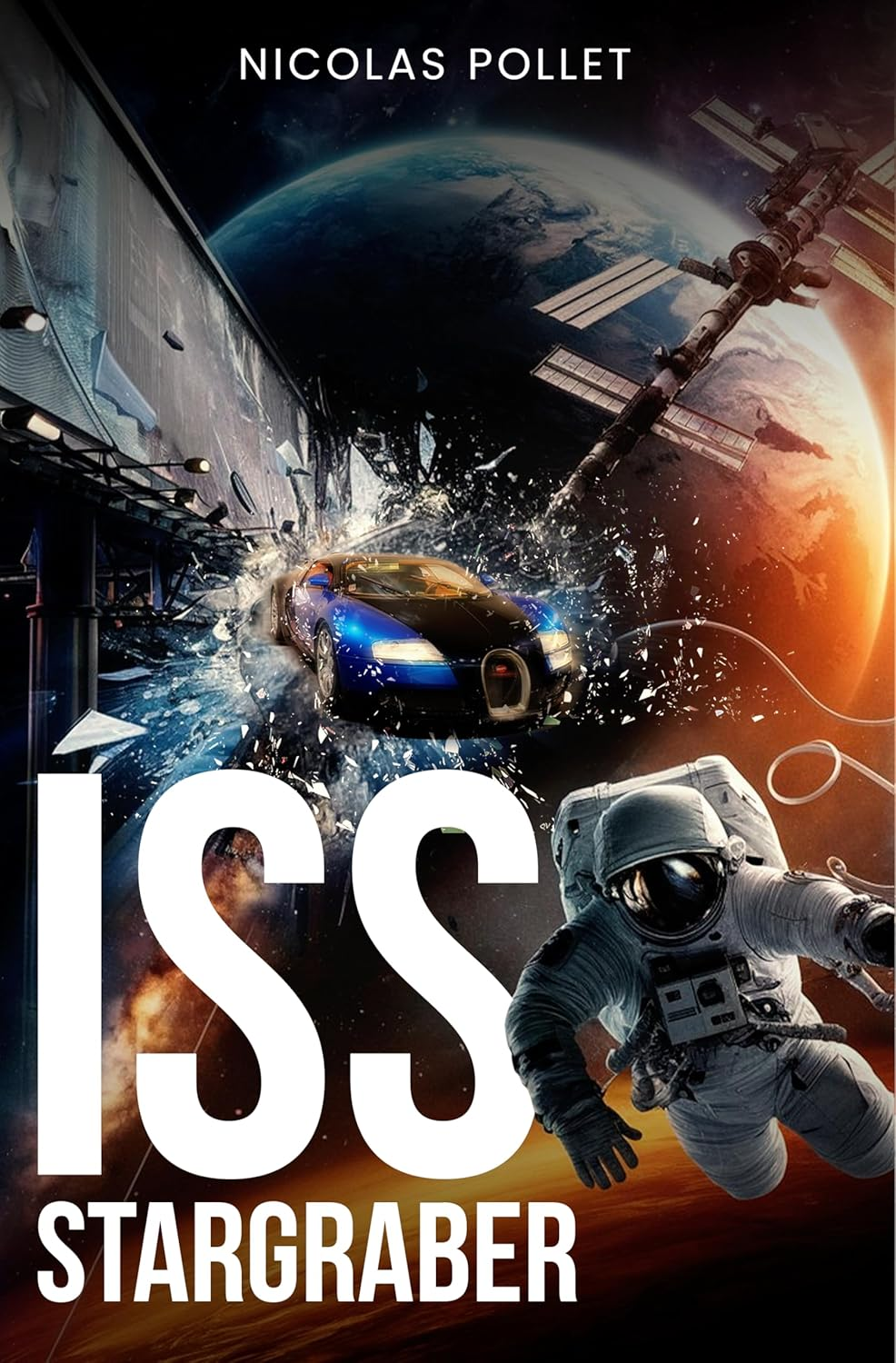
ISS Stargraber is one such story. It offers a vision of a massive orbiting station that becomes a vital lifeline for Earth. It also shows how fragile such a creation can be when sabotage and political tension begin to undermine it. If you enjoy exploring ideas about living beyond the ground, this book offers a rich and engaging perspective that might spark your imagination.
Get your copies from Amazon: https://www.amazon.com/dp/1967963231.