Space travel was the stuff of dreams. These concepts are told through telescopes, sci-fi novels, and Hollywood blockbusters. But over the past two decades, what once seemed impossible has become an emerging reality. Private companies launch reusable rockets. Nations are planning to return to the Moon. New missions are in place to relocate humans to Mars. The future of space travel is evolving faster than most people realize.
From reusable boosters to space hotels, we are entering a new era of exploration.
NASA has pioneered space travel. But private industry is now driving much of the progress. For example, SpaceX, Blue Origin, and Boeing are leading a wave of commercial space travel ventures. SpaceX’s Falcon 9 rockets have made reusability standard, reducing launch costs. Their fully reusable spacecraft are designed for missions to the Moon, Mars, and beyond.
In 2021, SpaceX launched its first all-civilian crew. It was a historic moment that proved space travel is no longer just for astronauts. Plus, with companies like Virgin Galactic and Axiom Space planning tourist experiences, the dream of seeing Earth from orbit is moving from fantasy to high-end reality.
The Artemis Program, led by NASA with global partners, aims to land humans on the Moon by 2025. They plan to establish a sustainable lunar presence and eventually use the Moon as a launching pad to Mars. Meanwhile, robotic explorers continue to push boundaries. China’s Chang’e missions to the Moon, India’s Chandrayaan program, and NASA’s Perseverance rover on Mars. These missions and collaborations demonstrate the global momentum behind space exploration.
Artificial intelligence and autonomous robotics also increase navigation, mining, maintenance, and decision-making roles. Plus, space habitats, rotating space stations, and space-based solar power systems are in place and being made and tested to support long-term presence in orbit and on other celestial bodies.
NASA’s Gateway project will orbit the Moon and serve as a support platform for deep-space missions. Meanwhile, companies like Blue Origin are envisioning entire space-based cities. New materials like carbon composites and regenerative life support systems will be key to building safe, livable environments for long-duration missions.
While these are the potential, what are some challenges ahead?
Despite these strides, space travel is still immensely risky. It is also expensive. Exposure to cosmic radiation, long-term muscle degradation, psychological stress, and the danger of equipment failure remain major concerns. Moreover, ethical considerations around space colonization, debris management, and planetary protection will also need attention. However, with the current R&D rate and development, there will soon be a time when we could witness the first real-time space travel.
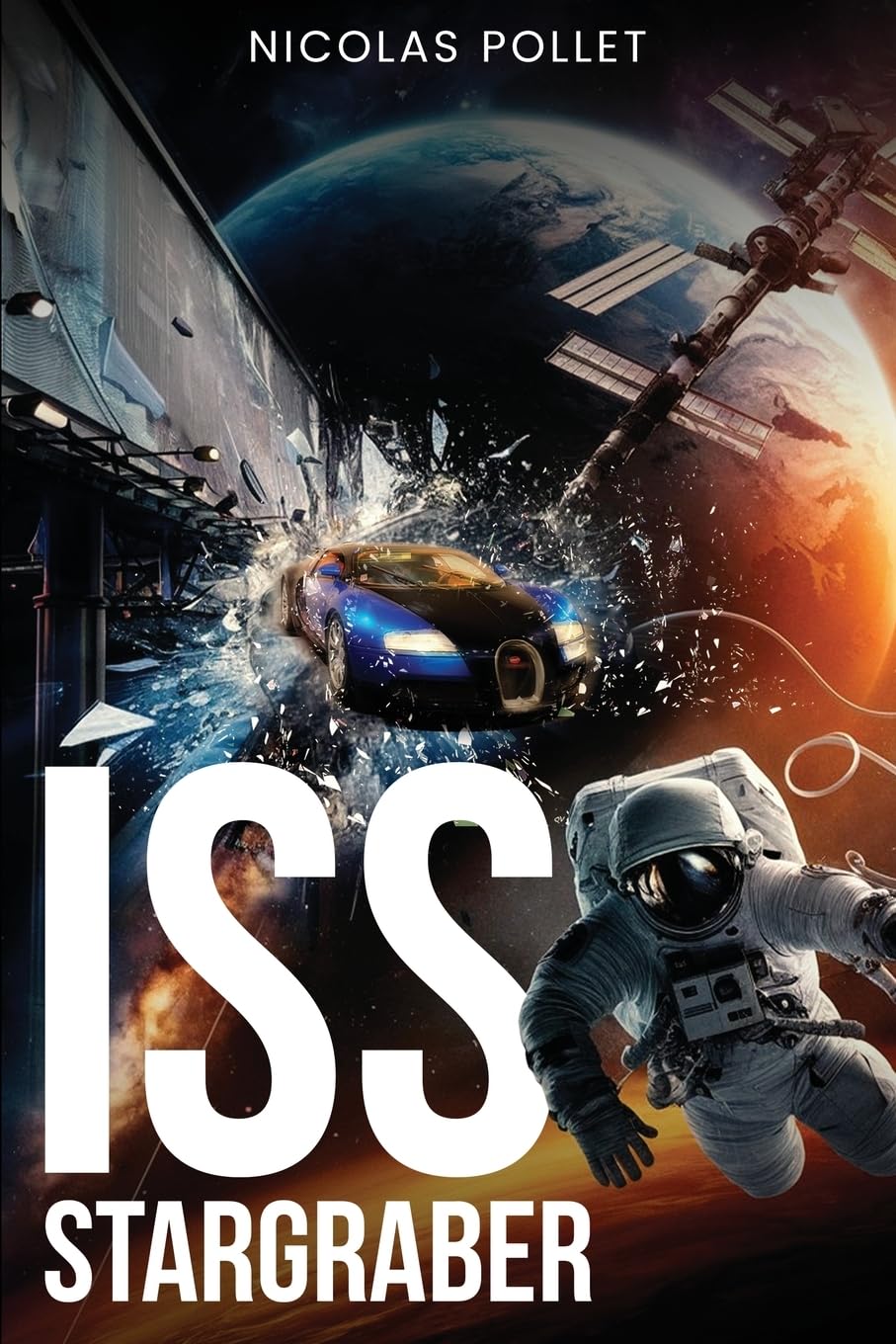
To understand where space travel may take us, science fiction often provides a blueprint. Books like ISS Stargraber by Nicolas Pollet envision what could be.
Set in 2153, ISS Stargraber imagines a near-future world where the International Space Station has evolved into a massive 25,000-mile orbital ring. This ring collects solar energy and powers Earth. But when this station encounters a threat, John Desmond, a security officer, must uncover a plot that could bring down the structure to rubble.
With its combination of plausible technology, political tension, and human drama, ISS Stargraber is a perfect fiction. This book captures the thrilling edge of the future and what we stand to lose if we don’t protect it.
The future of space travel is here, building piece by piece. And ISS Stargraber is a brilliant persona of that vision that will only add to our fascination.
Want to know more? You can purchase the book from Amazon: https://www.amazon.com/dp/B0F56P7XVR.