Every generation faces its own kind of test. For ours, it may not come in the form of war or conquest, but in the choices we make about technology, the planet, and the future we leave behind. The question is simple but unsettling: what would you be willing to give up to save humanity? Comfort? Control? Your own certainty about what is right? Nicolas Pollet’s ISS Stargraber asks this question through a story set among the stars, but its message speaks directly to us on Earth.
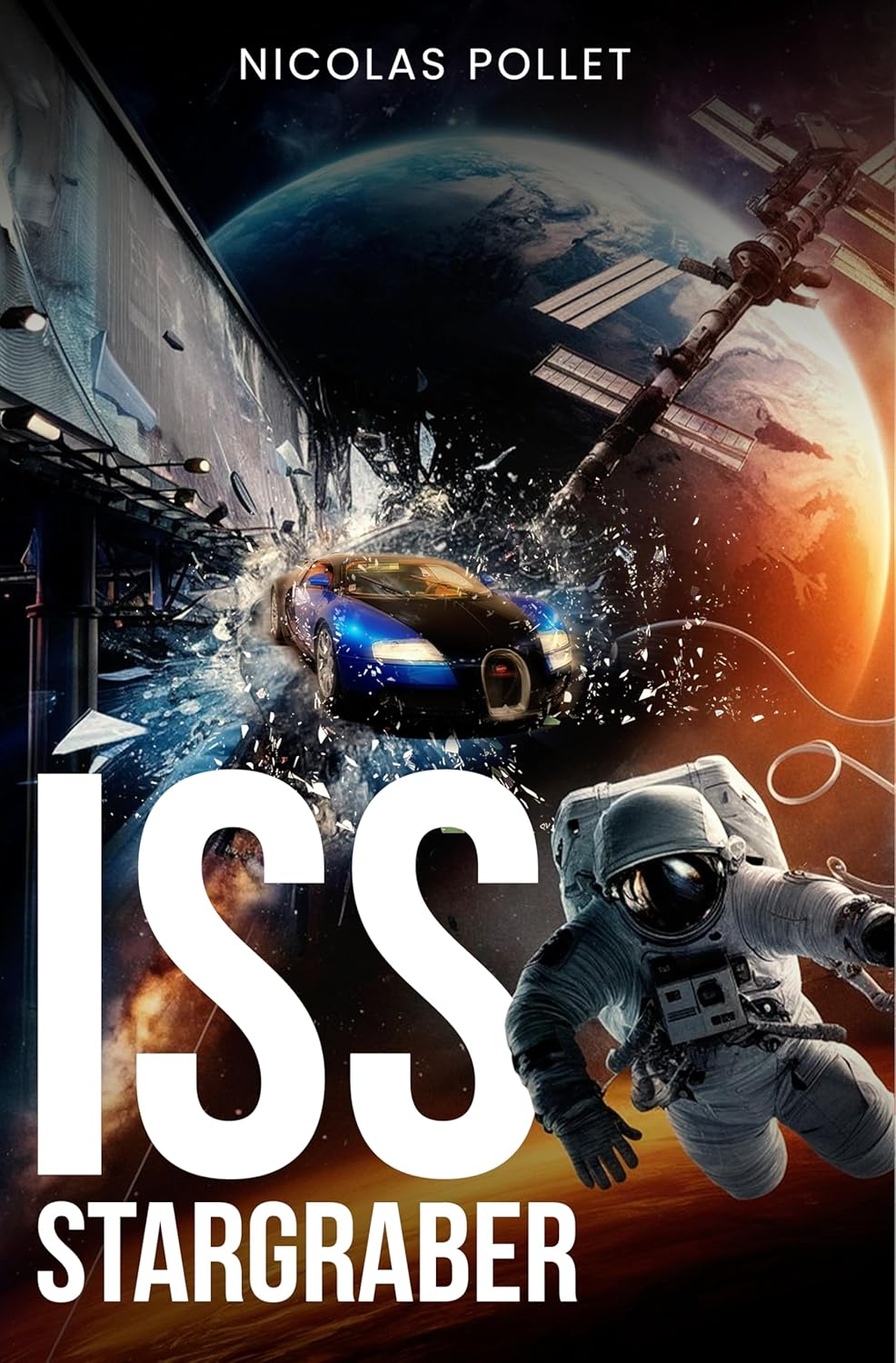
At its core, ISS Stargraber is about power, the power to create, to destroy, and to decide who survives when the stakes are global. The story takes place aboard the Stargraber Geo Orbital Station, an enormous human-made ring encircling Earth. Built to harvest and transfer unlimited solar energy back to the planet, the station stands as a monument to human achievement. However, as with most human creations, it carries the seeds of danger within it. When greed, fear, and political ambition creep in, the station becomes a battleground for survival, and its mission of progress turns into a test of morality.
The book’s main character, John Desmond, is a man haunted by loss and guilt. Once a pilot, now a security officer, he finds himself torn between personal peace and the greater good. Alongside him stands Victoria Palmers, an engineer who uncovers a deadly conspiracy that could wipe out both the station and Earth below. Together, they represent the two sides of the same question: how much of ourselves are we willing to risk for something larger than us?
This theme reaches beyond fiction. In our own world, the same dilemma plays out in quieter ways every day. Scientists, leaders, and ordinary citizens must decide how far to go in protecting the environment, reducing consumption, or challenging systems that harm the planet. Sacrifice today might mean living with less convenience or comfort so that future generations can have more. The question is not whether we can save humanity, but whether we are willing to pay the price for it.
In ISS Stargraber, sacrifice takes many forms. Some characters give up safety, others give up truth, and a few lose everything for a chance to do what they believe is right. What makes the story powerful is its honesty about human nature. It does not pretend that the right choice is easy. Even the antagonist, Mathias Bronski, believes he is saving humanity by destroying part of it. His conviction mirrors the dark side of idealism, where noble intentions can lead to terrible consequences.
The book reminds us that progress and compassion must coexist, or both will fail. The future cannot be built on destruction, no matter how pure the motive. Humanity’s survival depends not only on innovation but on empathy, the willingness to care about lives we will never see and generations we will never meet.
Ultimately, ISS Stargraber is not just about saving the world from disaster. It is about keeping what makes the world worth saving, our capacity for love, sacrifice, and moral courage.
For readers who enjoy science fiction that looks beyond machines and into the human heart, ISS Stargraber by Nicolas Pollet is an unforgettable reminder that the most brutal battles are often the ones fought within ourselves.
Get your copies from Amazon: https://www.amazon.com/dp/1967963231.