Power can build great civilizations, but it can also become the source of their downfall. Throughout history, societies have witnessed how ambition, greed, and the abuse of power can lead to instability and conflict. Science fiction often explores these dynamics by projecting them into futures where technology and governance are intertwined in ways that magnify both human potential and human risk. Nicolas Pollet’s ISS Stargraber presents a compelling vision of this struggle, illustrating how unchecked power can threaten not only individuals but entire worlds.
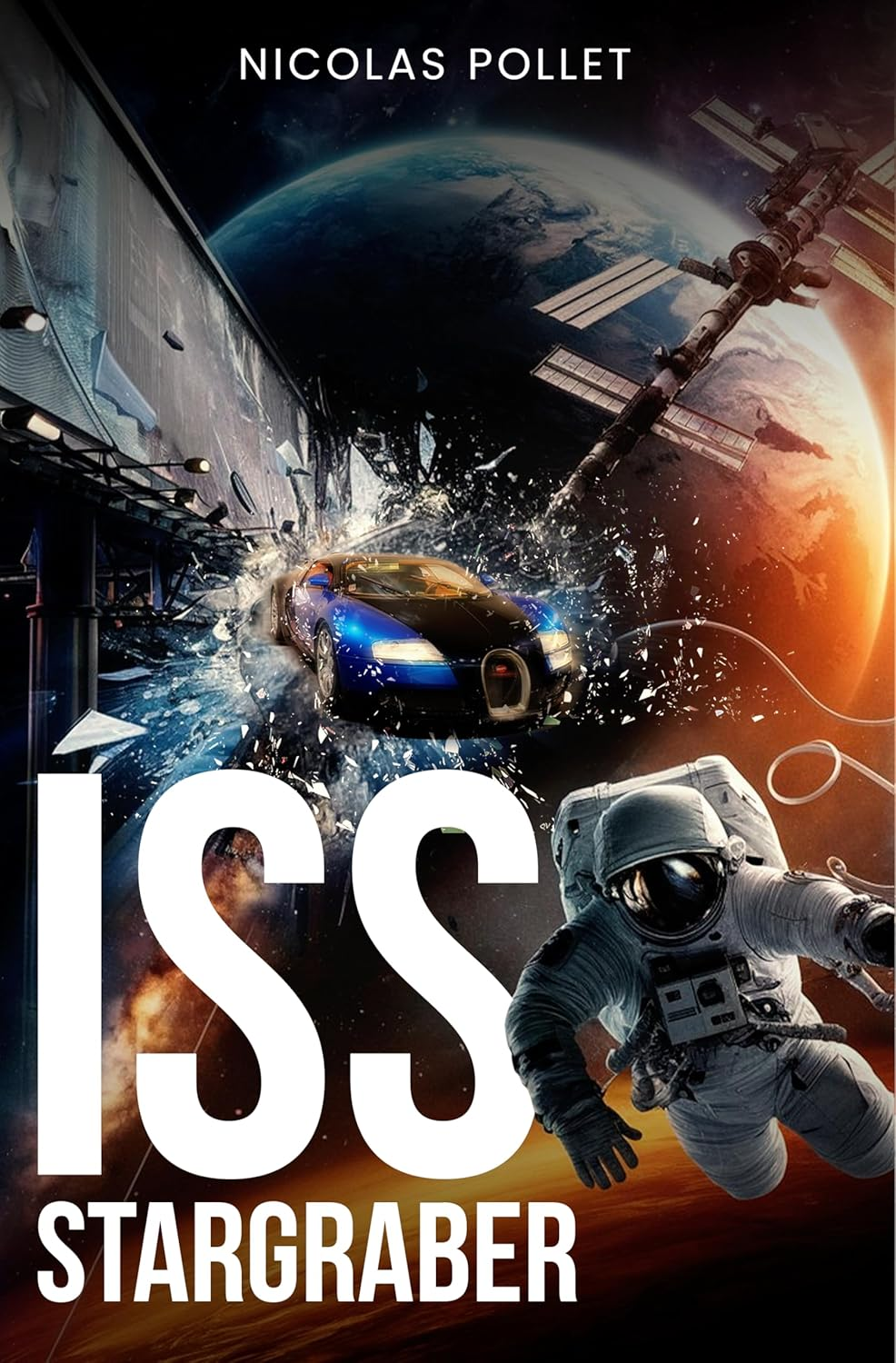
The Stargraber Geo Orbital Station, the setting of the novel, is an immense human-made structure orbiting Earth. It is designed to provide unlimited solar energy, representing a pinnacle of human innovation. Yet within its massive corridors, corporate and political agendas clash, and conspiracies emerge that could jeopardize the safety of the station and the planet below. It mirrors real-world concerns about the concentration of power in technology and energy sectors, where decisions made in boardrooms or government offices can have far-reaching consequences.
ISS Stargraber uses its setting to highlight how power can become an enemy when it is pursued without accountability. John Desmond, the protagonist, is a former fighter pilot turned security officer, who must navigate these murky waters while dealing with his own personal grief. His journey exemplifies how individuals can resist manipulation and advocate for ethical action, even when surrounded by forces that prioritize self-interest over the common good. By focusing on the human element within a high-stakes technological environment, the novel reminds readers that power’s impact is ultimately measured through its effects on people, not just structures or systems.
Corporate and political conspiracies are not limited to fiction. Globally, we see parallels in debates over energy control, cybersecurity, and AI development. Decisions made by a few individuals or organizations can have a profound impact on billions, underscoring the importance of transparency and ethical governance. In science fiction, these themes are often amplified, providing both cautionary tales and reflections on our current trajectory. ISS Stargraber succeeds in this by highlighting the tension between innovation and manipulation, as well as the consequences of choices that prioritize ambition over responsibility.
The story also emphasizes resilience and collaboration as tools to counteract the dangers of concentrated power. Partnerships, trust, and moral courage become essential in overcoming challenges that technology alone cannot solve. This theme resonates with broader discussions in modern science fiction, from Neuromancer to Altered Carbon, where characters navigate systems of control while asserting their agency and humanity.
Science fiction’s power lies in its ability to imagine extremes while reflecting on reality. ISS Stargraber not only entertains with thrilling plots and futuristic technology but also encourages reflection on ethical responsibility, the consequences of unchecked power, and the ways human resilience can prevail in even the most controlled environments.
For readers who enjoy stories that combine futuristic adventure with thought-provoking insight into human behavior and governance, ISS Stargraber by Nicolas Pollet is a must-read. It challenges us to consider how power should be wielded and how humanity can survive when the stakes are higher than ever.
Get your copies from Amazon: https://www.amazon.com/dp/1967963231.