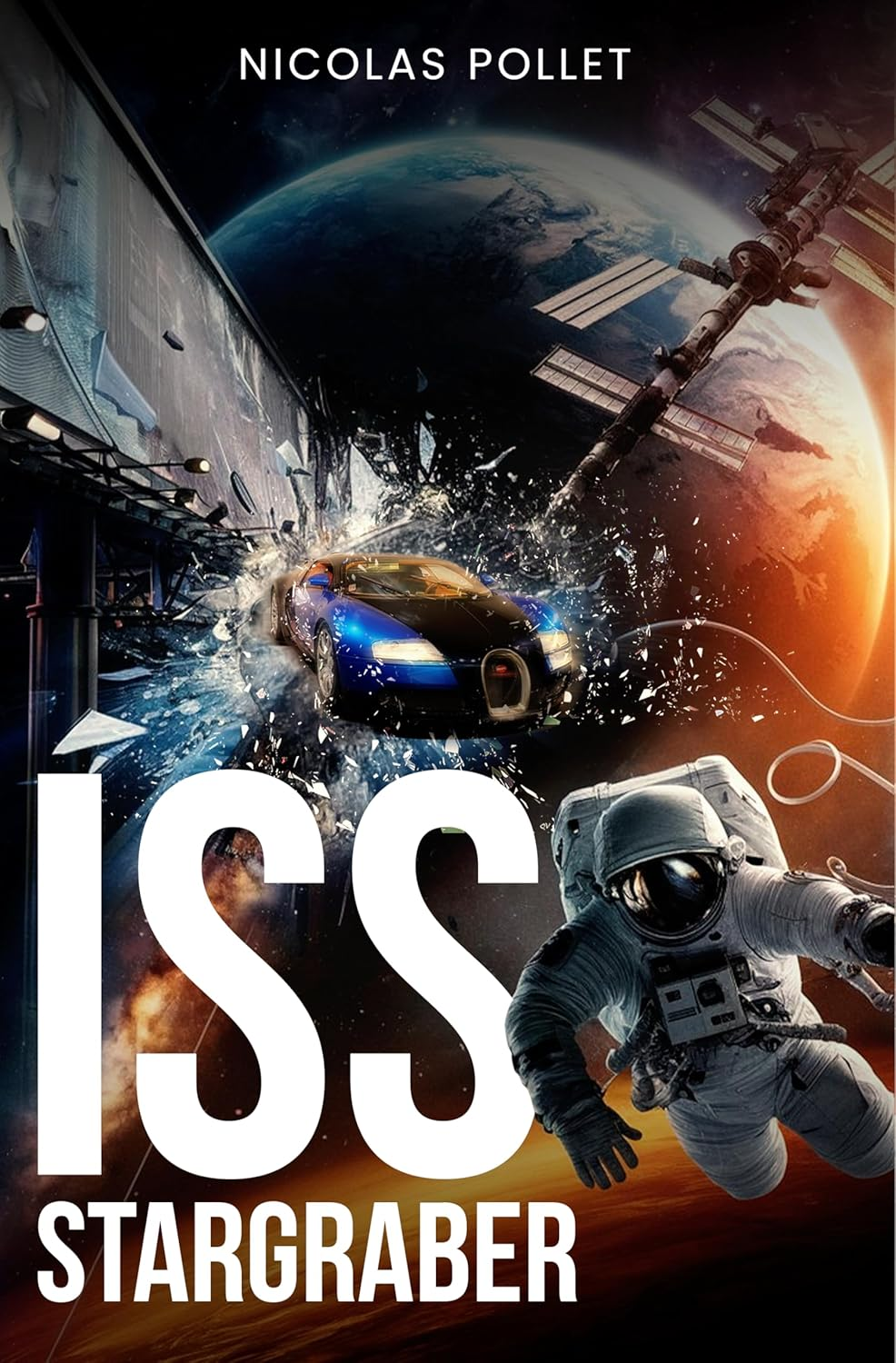
In ISS Stargraber, Nicolas Pollet introduces John Desmond. He is a former Navy pilot turned security chief on a futuristic space station as a hero who feels both larger-than-life and achingly human. Haunted by the loss of his wife, Isabella, in a tragic car crash, John is a man of grit, vulnerability, and unyielding determination. Unlike other science fiction heroes, he is a character that makes him the sci-fi protagonist we need today.
For readers who love character-driven stories and action-packed sci-fi, John’s journey through duty and sacrifice echoes icons like Ellen Ripley and Rick Deckard yet carves its own path.
John’s backstory as a fighter pilot sets him apart as a man of action. At six feet tall and “80 pounds of muscle,” he’s a physical force, yet his love for vintage cars—like his doomed Bugatti—grounds him in a tactile, almost nostalgic world. This duality mirrors Ripley in Alien, whose blue-collar toughness as a warrant officer hides a fierce survival instinct. Like Ripley, John thrives under pressure, whether navigating Stargraber’s corridors or facing a shadowy conspiracy threatening Earth. But where Ripley’s fight is primal, John’s is layered with guilt. He blames himself for Isabella’s death, a wound that drives his mission to protect others.
This vulnerability makes John relatable, much like Rick Deckard in Blade Runner. Deckard’s moral ambiguity and emotional fatigue clash with his duty as a blade runner, just as John grapples with his past while safeguarding Stargraber’s 10 million residents. John’s refusal to live on the station before Isabella’s death, calling it a “pressurized sausage,” reveals his stubborn attachment to Earth. Yet his move thereafter, after her beloved’s loss, shows a man seeking redemption in duty. Pollet crafts John as a loner with a big heart, afraid to love again until he meets Victoria Palmers, echoing Deckard’s cautious romance with Rachael.
What sets John apart is his sacrifice. Tasked with stopping a genocidal plot, he risks everything, from high-stakes jumps to confronting a villain shielded by a force field. This echoes the book’s theme of duty as John’s not just saving Stargraber but honoring Isabella and his fallen friend, Archi. Unlike Ripley, who fights for survival, or Deckard, who questions his humanity, John’s drive is selfless and determined. His climactic freefall to sever a module, knowing it could kill him, feels like a modern myth. He is a hero wagering his life for billions.
John’s appeal also lies in his flaws. He’s no infallible superhero. He drinks too much, mourns too deeply, and doubts his choices oftentimes. Yet these cracks make him a human and relatable character. His courage shines brighter, and we, as readers, could not help but to root for him as he made his way to save Earth and the ISS from the doom.
In the end, in a genre filled with stoic saviors or tortured antiheroes, John balances both, offering a beacon of hope who’s still one of us.
For sci-fi fans or anyone who carves for realistic and more humane characters, John Desmond reminds us that heroes don’t need capes—they need heart. His story in ISS Stargraber challenges us to face our demons and fight for what matters, making him a protagonist, a character who resonates long after the final page.
So, are you ready to meet John Desmond? Then, all you have to do is read ISS Stargraber and join John on his daring journey. Would he be able to save Earth before it is too late? Only reading this book will lead you to a conclusion.
Grab your copy on Amazon: