For decades, space has fascinated writers, filmmakers, and dreamers. It has been portrayed as a place of exploration, discovery, and infinite possibility. But in recent years, and particularly in works like ISS Stargraber, space has become the ultimate setting for suspense and thrill. Why is space such fertile ground for tension, mystery, and fear? The answer lies both in the setting’s physical realities and in the emotional terrain it unlocks.
First, space is unforgiving. There is no margin for error in orbit. A single malfunction, a tiny piece of debris, a human mistake, and death follows almost instantly. Unlike Earth, where errors can often be corrected or survived, space offers no second chances. In ISS Stargraber, this reality underpins every moment of tension. When John Desmond investigates a mysterious explosion aboard Stargraber Station, he knows that even a minor failure could doom millions back on Earth. The stakes are as high as they can be, and there is no safe harbor, no outside help.
Secondly, space isolates its characters both physically and psychologically. On Stargraber, John is cut off from Earth, floating in a fragile chain of modules tethered to nothing but the thin veil of technology. Every conversation, every discovery, every suspicion is intensified by the knowledge that there is nowhere else to go. When sabotage strikes, the claustrophobia is palpable. The walls seem to close in—not just physically, but emotionally. Trust becomes a rare and precious commodity.
Space also magnifies human ambition and frailty. In ISS Stargraber, Stargraber Station represents humanity’s greatest achievement. It is a unification of technology, politics, and hope. But it is precisely because the station is so grand, so vital, that it becomes a target for sabotage. In the closed environment of a space station, motives are amplified, secrets fester, and betrayals cut deeper. Space strips away the noise of ordinary life and leaves only raw ambition and fear.
Another reason space is perfect for suspense is the timeless fear of the unknown. Even today, despite all our satellites and missions, we have barely scratched the surface of understanding the cosmos. In ISS Stargraber, this unknown isn’t filled with aliens or monsters—it’s filled with human decisions, mistakes, and consequences. The mystery John faces isn’t from an external invader; it’s from within, and that makes it even more chilling.
Finally, space introduces a unique kind of time pressure. In orbit, systems are constantly moving, degrading, and requiring balance. Time becomes a weapon. In ISS Stargraber, every second matters. A delayed response, a miscalculation, a missed clue, they don’t just risk the protagonist’s life, they risk the stability of Earth itself. The ticking clock is omnipresent, set against the vast silence of space.
Through the lens of ISS Stargraber, we see how space has evolved from being simply a setting for wonder to becoming a crucible for suspense. Space debris, energy transfer, orbital physics, and other real-world scientific concepts are all incorporated into the book along with emotional truths like fear, hope, grief, and loyalty. It shows us that while the vacuum of space is cold and indifferent, the true danger lies within human hearts.
In the end, ISS Stargraber captures why space is the ultimate frontier for suspense storytelling. It’s not just because the dangers are immediate and inescapable. It’s because in the vast emptiness of the cosmos, we confront the deepest truths about ourselves and realize that no amount of technology can completely protect us from human nature.
Will John be able to save the ISS Stargraber from danger? If so, what will be the consequences?
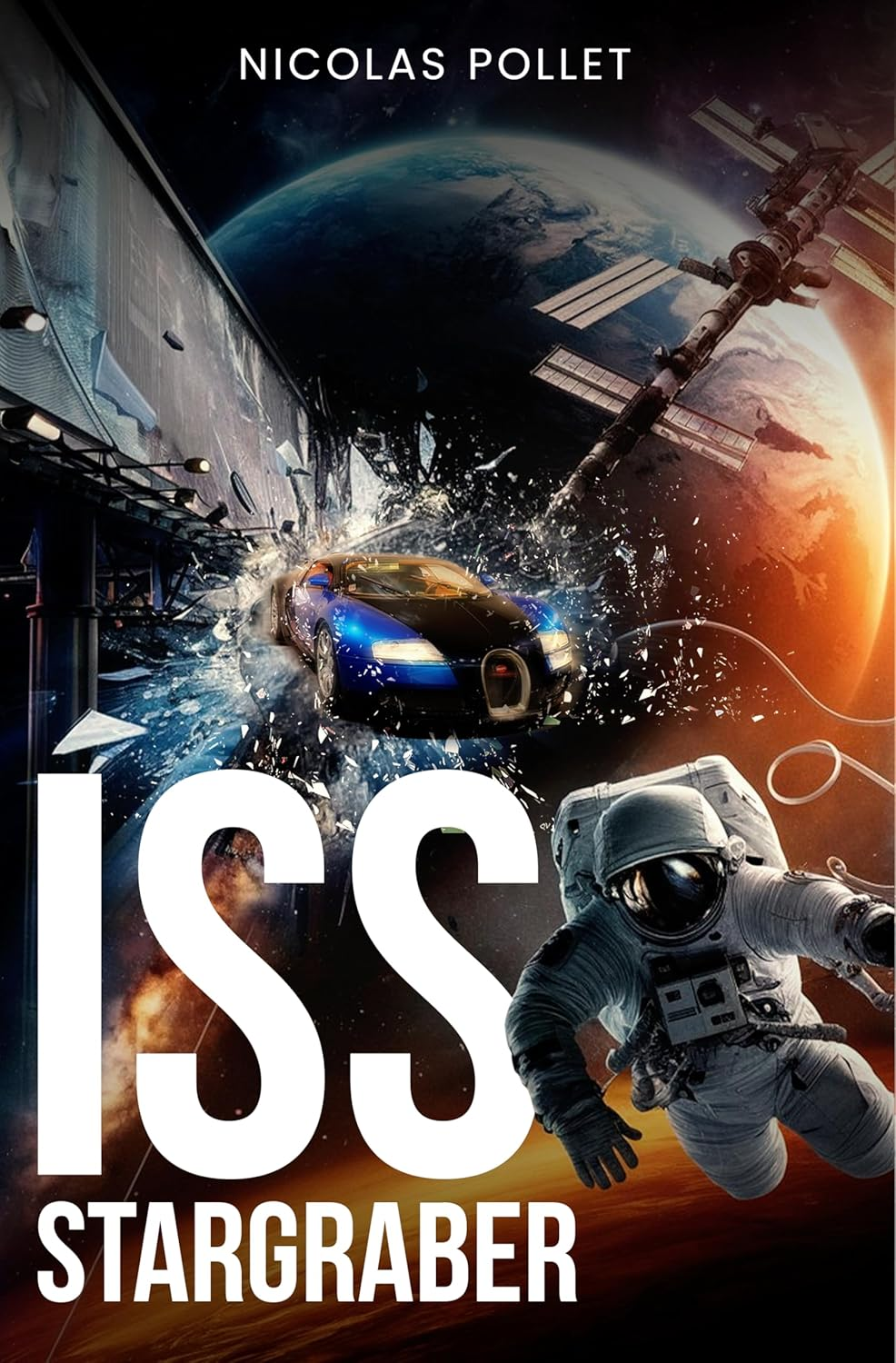
The ISS Stargraber by Nicolas Pollet is a gripping sci-fi thriller set in 2153 aboard the Stargraber Geo Orbital Station, a colossal 25,000-mile-long megastructure encircling Earth. This marvel of human ingenuity powers a fossil-fuel-free world with limitless solar energy, but its utopian promise hides a deadly threat. John Desmond, a former Navy pilot turned security chief, grapples with personal loss while uncovering a conspiracy that could annihilate billions. Joined by Victoria Palmers, a brilliant geochemist, John races against time to stop an elusive adversary bent on catastrophic destruction. Pollet weaves high-stakes action, plausible tech like space elevators, and raw human emotion into a page-turner that explores duty, sacrifice, and the fragile line between progress and peril. Perfect for fans of The Expanse and Project Hail Mary, this novel will keep you hooked until the final orbit.